
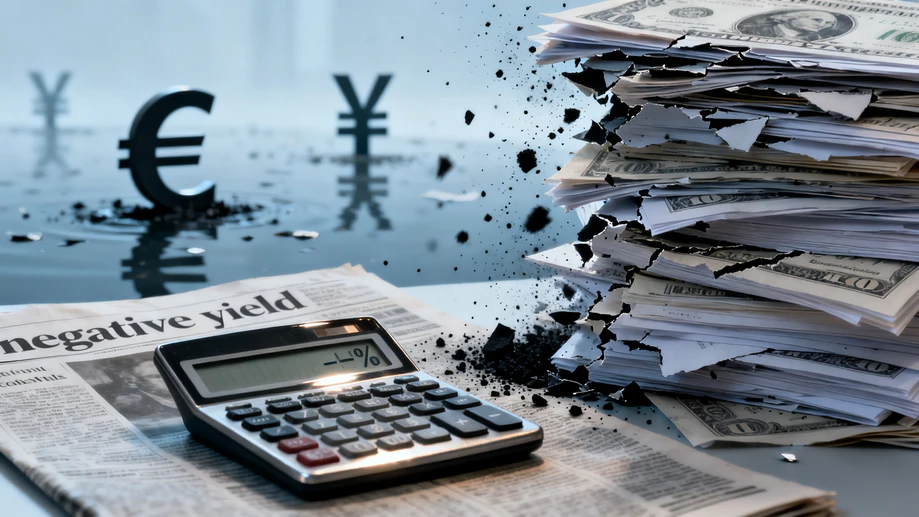
Negative Yields Are Swallowing the World
How Trillions in Bonds Pay You to Lose Money
Picture lending money to someone and agreeing to get back less than you gave them. Sounds irrational, yet this bizarre reality defines today's negative-yielding bond market where over $15 trillion worth of government and corporate debt essentially charges investors for the privilege of parking their cash. Driven by central bank policies and economic uncertainty, these bonds have exploded from a niche European phenomenon into a global financial force, flipping traditional investing logic upside down. Savers worldwide face a surreal landscape where safety comes with a guaranteed loss.
The mechanics work through bond prices and yields moving inversely. When demand surges for bonds issued by stable governments like Germany or Japan, their prices soar so high that the effective interest payment dips below zero. Investors aren't entirely irrational though—many accept small losses as "storage fees" to shield colossal sums during market storms. A multinational corporation might pay €100 million for a Swiss bond maturing at €99.5 million purely to safeguard liquidity during a merger. Pension funds, constrained by regulation, often have no choice but to hold some negative-yielding assets despite the erosion.
Europe pioneered this twilight zone with Scandinavian and Eurozone debt leading the charge, but Japan’s long battle against deflation cemented the trend. Negative yields contagiously spread to corporate bonds and even briefly touched U.S. Treasury notes during 2020's panic. The European Central Bank’s aggressive stimulus programs—essentially buying bonds at any price—acted as rocket fuel. Banks became reluctant lenders trapped between charging depositors (politically explosive) and swallowing losses themselves. The perverse outcome: saving money actively destroys value while speculators chase riskier assets.
This inverted world punishes retirees and savers most brutally. Pension funds relying on bond income now face impossible math, forcing benefit cuts or riskier bets. Japanese banks saw profits evaporate as margins collapsed. Even homebuyers felt ripple effects as pension shortfalls delayed retirement, keeping older workers in jobs longer and reducing housing turnover. Paradoxically, governments issuing negative-yielding debt celebrate it as "free borrowing," ignoring the long-term societal costs of distorted capital allocation and zombie companies kept alive by cheap loans.
Are negative yields permanent? Current trends suggest they're cyclical rather than extinct. As inflation roared back post-pandemic, major central banks hiked rates aggressively, slashing negative-yielding debt from its $18 trillion peak. Yet the underlying sickness remains—aging populations increasing demand for safe assets, technological deflationary pressures, and memories of 2008/2020 crises keeping institutional investors perpetually cautious. The next recession could easily resurrect negative yields overnight. Europe's bond markets remain especially vulnerable given sluggish growth and structural dependence on ECB support.
For ordinary investors, navigating this landscape requires pragmatism. Accepting near-zero returns on cash or high-grade bonds beats gambling on meme stocks during volatility. Diversifying into inflation-protected securities, select dividend stocks, or non-euro government debt provides partial shields. Most crucially, recognize negative yields as a flashing warning sign about market fragility rather than an investment strategy. Their persistence reveals a deep global anxiety—that losing money slowly sometimes feels safer than risking it all. When bonds pay you to lose, the real return is peace of mind... at a price.