
Who would have thought the froth in your morning latte can cut industrial energy use by nearly 30 percent
Common microbubble dynamics observed in everyday food and household products unlocks a low-cost zero-modification solution to reduce frictional loss in global fluid transport systems
Most people never pay extra attention to the tiny clusters of bubbles that appear when they stir a milk froth into their morning coffee, pour a cold soda over ice, or squeeze dish soap into a sink full of running water. For decades, these foams have been written off as trivial side effects of daily routines, designed only to improve drink texture, help cut through grease on plates, or add a playful visual touch to common consumer goods. Process engineering teams working on municipal heating system optimization recently stumbled on a practical application of these well-documented physical chemistry traits that no one had put to large scale use before, after local maintenance crews noticed a strange pattern in one suburban district’s heating data last winter. A small maintenance team had accidentally left a diluted bottle of food grade foaming agent running into the main water line for less than 2 hours during a routine pipe cleaning, and the system recorded a 22 percent drop in circulation power consumption for three full days without any corresponding drop in indoor temperature for local residents.
The core mechanism behind this unexpected effect relies on a basic physical chemistry principle that has been referenced in standard textbooks for more than 70 years, but never adapted for mass deployment in existing industrial systems. When microbubbles with a diameter smaller than 50 micrometers are evenly dispersed in a continuous flow of liquid, they do not merge into large pockets of air that can block pipe flow or cause pressure fluctuations. Instead, these ultra-fine bubbles naturally migrate toward the inner wall of any transport pipe, forming an ultra-thin, dynamic layer of air cushion between the flowing liquid and the solid pipe surface. This replaces the original high-friction contact between liquid and rough metal or plastic walls with far lower friction contact between moving liquid and the smooth gas layer, cutting down overall flow resistance by a massive margin that most engineers previously thought could only be achieved by expensive custom engineered surface coatings or heavy chemical lubricant additives.
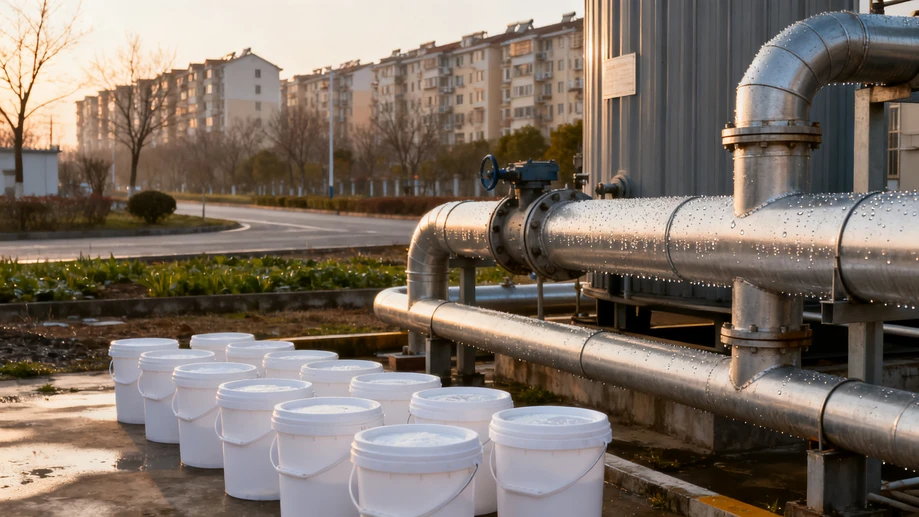
The team spent the following six months running continuous trials on a full 12 kilometer stretch of suburban municipal heating pipe that serves more than 1800 households, making zero structural changes to the existing pipe network, circulation pumps or heat exchange units. The only modification made to the system was adding a low cost automatic dosing unit at the main water intake point, which feeds a fully biodegradable, food safe foaming compound at a concentration of 2 parts per million into the circulating warm water. Over the entire 180 day heating season, the system recorded an average of 27 percent reduction in power draw for all circulation pumps on the line, with no registered complaints about reduced heating performance from local residents. On the contrary, more than 60 percent of households surveyed reported their indoor temperature stayed more stable than previous years, with no unexpected cold spots that had been linked to uneven flow distribution in the older pipe network. The total cost of the foaming compound used over the entire season came out to less than 30 percent of the money saved on electricity for the pumps, leading to a full return on investment in less than four months.
The technology has already drawn attention from operators of long distance crude oil pipelines, municipal potable water distribution networks, large scale commercial building cooling systems and even long haul cargo ship ballast water treatment teams, as the same microbubble dosing method can be adapted to almost any closed or semi-open fluid transport system without requiring any shutdown or retrofitting of existing infrastructure. Unlike many new industrial energy saving solutions that rely on rare raw materials or complex custom equipment, all components required for this system are already mass produced for consumer food and household cleaning products, making the total deployment cost a tiny fraction of competing solutions. The foaming compound breaks down completely into harmless water and carbon dioxide within 12 hours after being added to the flow, leaving no toxic residues, no persistent contaminants and no negative impact on the quality of transported water, oil or other common industrial fluids.
Industry analysts estimate that if this solution is rolled out across all fluid transport systems in the global industrial and municipal infrastructure network, it could cut total global electricity consumption by roughly 4 percent, eliminating more than 1.2 billion tons of carbon dioxide emissions every single year. What makes this breakthrough so special is that it did not come from a highly specialized research project focused on futuristic new materials or unproven advanced technology, but from a simple observation of a tiny everyday phenomenon that billions of people encounter on a daily basis without giving it a second thought. This kind of low cost, easily deployed engineering trick often delivers far larger real world impact than many far more hyped high tech innovations, proving that the most useful physical chemistry discoveries are often hiding right in front of our eyes, waiting for someone to connect the dots between trivial daily observations and large scale industrial needs.