
5 Mind Blowing Secrets Your Garden Keeps From You
Unveiling the astonishing science hidden in everyday nature
Step into your backyard and prepare for a revelation. That unassuming patch of green holds more drama than a spy thriller and more collaboration than a global summit. Beneath the surface lies a bustling metropolis where plants hold urgent conversations via airborne chemicals, fungi run subterranean internet networks, and ants practice sophisticated agriculture. This isn't science fiction – it's the real, breathtaking ecology playing out daily while you sip your morning coffee. Researchers using sensitive microphones have even detected distress 'screams' from thirsty tomato plants, emitted at frequencies beyond human hearing but perfectly audible to their leafy neighbors. It turns out your quiet garden is actually a non-stop hub of botanical chatter and silent negotiation.
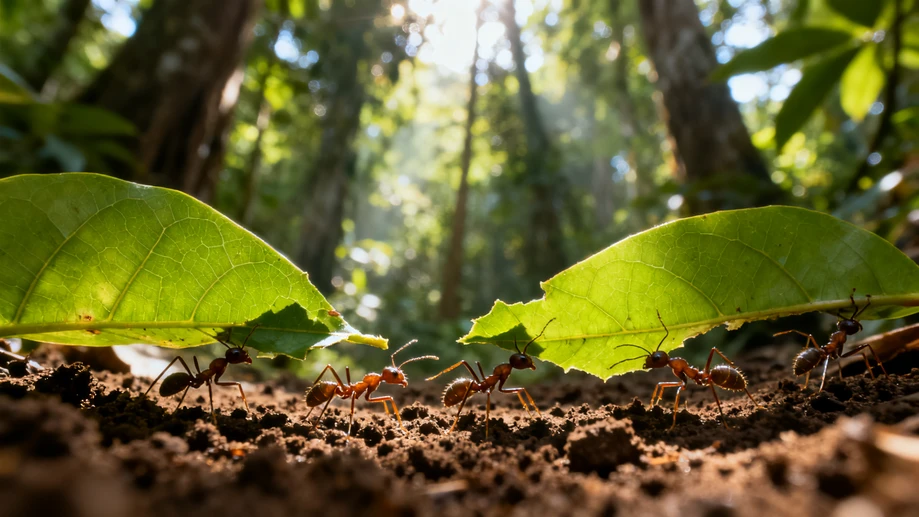
Consider the humble ant, nature's ultimate engineer. In Brazil's Cerrado savanna, leafcutter ants cultivate underground fungi farms with meticulous precision. Worker ants constantly measure leaf fragment sizes with their antennae to ensure perfect compost consistency for their crops. Their colonies feature complex ventilation shafts, waste disposal chambers, and dedicated 'nursery' zones – all temperature-regulated using strategically placed entrance tunnels to harness wind currents. This 50-million-year-old agricultural system rivals human innovation, proving that advanced farming isn't mankind's exclusive achievement. Witnessing columns of ants carrying leaf fragments reveals not mindless labor, but a highly organized supply chain directed by pheromone trails more efficient than any GPS.
Look closer at those rocks and tree trunks covered in crusty patches. Lichens, those colorful splotches you barely notice, are actually two organisms working as one. Fungi provide structural housing while algae or cyanobacteria conduct photosynthesis inside this living apartment. This partnership allows lichens to survive Antarctic blizzards, desert droughts, and even the vacuum of space during NASA experiments. Their slow growth (some arctic species add just 1mm per century) creates living records of environmental change. Scientists can read atmospheric pollution levels from decades past simply by analyzing lichen growth rings, turning these unassuming organisms into nature's archival librarians recording planetary history in silent patience.
The real underground revolution happens through the 'Wood Wide Web.' Miles of fungal threads called mycelium connect tree roots into vast communication networks. Older 'mother trees' use this fungal internet to send nutrients to shaded seedlings. When aphids attack a bean plant, it releases chemical signals through the mycelium network, warning neighboring plants to raise their defensive compounds. This subterranean social security system even transcends species – Douglas firs have been recorded nourishing paper birch trees in summer, who return the favor during winter when their leafless companions struggle. Your garden's trees aren't solitary competitors but cooperative community members engaged in constant resource exchange.
Perhaps most astonishing is how this hidden world influences us directly. Take geosmin, that evocative 'petrichor' scent after rain. It's actually a chemical signal released by soil bacteria called streptomyces when reproducing. Humans detect it at concentrations of just five parts per trillion – making us more sensitive to this earthy perfume than sharks are to blood in water. This remarkable sensitivity likely evolved because it helped our ancestors locate water sources. Your deep instinctive pleasure when inhaling the post-rain air connects you directly to microbial conversations happening at your feet, a primal dialogue written in aromatic chemistry that predates humanity itself. Nature's unseen wonders aren't hidden in distant jungles, but thriving silently in the soil beneath your shoes.