
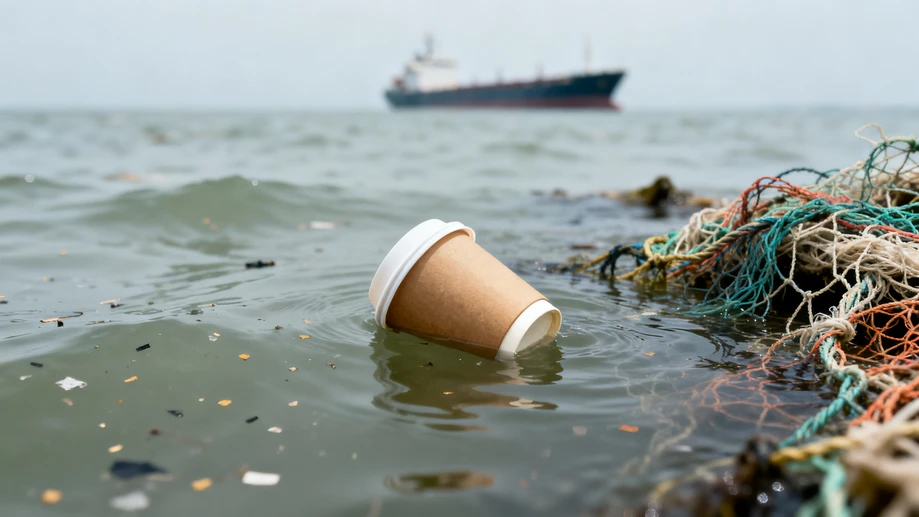
Unravel the Epic Journey of Your Morning Coffee Cup
From Your Kitchen to the World's Oceans: A Surprising Tale of Everyday Waste
Imagine tossing your disposable coffee cup into the bin after a quick caffeine fix—it seems like the end of the story, but that's only the beginning of an incredible global adventure. Each year, over 300 million tons of plastic waste are generated worldwide, and much of it escapes into nature, embarking on voyages as epic as any explorer's quest. Starting from urban landfills or littered streets, your cup might hitch a ride on wind and rain into rivers. Recent studies reveal that rivers like the Yangtze or the Mississippi carry plastic debris at astonishing speeds, with some items traveling hundreds of kilometers in mere weeks. This hidden migration isn't just a local issue; it's a planetary saga where your trash becomes an unwitting globetrotter. By learning about this journey, we uncover how a simple morning ritual connects us to oceans thousands of miles away, making the invisible visible and transforming our perspective on everyday waste.
Once in the waterways, plastic faces a turbulent path orchestrated by Earth's natural forces. Rainstorms and floods act as powerful couriers, sweeping items from city drains into rivers, which then flow relentlessly toward the sea. Take the example of a plastic bottle discarded in Bangkok: it can enter the Chao Phraya River, navigate through bustling ports, and reach the Gulf of Thailand within months. From there, ocean currents take over. The Great Ocean Conveyor Belt, a global system of deep-water flows, carries debris across vast distances. A toy duck lost in a 1992 shipping accident near Alaska has been tracked to beaches in Hawaii and even Europe, highlighting how interconnected our world is. Wind patterns also play a role, with microplastics—tiny fragments from broken-down items—riding air currents to remote locations like the Arctic. This phase of the journey turns trash into unintentional travelers, demonstrating that what we discard doesn't vanish—it relocates, creating a web of pollution that spans continents.
As plastic drifts into the open ocean, it joins massive floating garbage patches, the most famous being the Great Pacific Garbage Patch. Covering an area larger than Texas, this swirling vortex isn't a solid island but a dense soup of microplastics and larger items, held together by currents. Scientists estimate it contains over 1.8 trillion pieces of debris, accumulating from coastlines worldwide. The journey isn't swift; a coffee cup from New York might take years to reach this patch, buffeted by waves and sunlight that slowly break it down. Yet, this isn't passive drifting—the plastic interacts with marine life in alarming ways. Fish and seabirds mistake colorful fragments for food, ingesting toxins that move up the food chain. In a startling twist, researchers have found plastics in over 90% of sea turtles and 50% of seabirds globally, turning what seems like a distant problem into a direct threat to biodiversity. This odyssey reveals the paradox of convenience: our disposable items become immortal travelers, persisting for centuries while harming ecosystems they never intended to visit.
The environmental impact of this global trek is profound and unexpected, affecting everything from tiny plankton to human health. Microplastics, born from the degradation of larger items, have infiltrated the most remote corners of Earth. Studies show they're present in Antarctic ice and atop Mount Everest, carried by winds and currents. Once ingested by small marine organisms, these particles release chemicals like BPA and phthalates, which disrupt hormones and cause long-term damage. For instance, coral reefs—a vital marine habitat—are suffocating under plastic blankets that block sunlight and introduce disease. But it's not all doom; nature has ingenious responses. Some bacteria have evolved to digest plastics, offering hope for natural cleanup. Scientists are documenting how albatrosses in the Pacific inadvertently collect plastic for nests, leading to hybrid structures that serve as both shelter and hazard. These real-world examples make the science relatable and urgent, showing that plastic's journey isn't just an environmental crisis—it's a biological entanglement that reshapes life in our oceans, with ripple effects reaching our dinner plates.
Globally, nations are uniting to tackle this issue through innovative initiatives, proving that collective action can rewrite the plastic's story. The United Nations' Clean Seas campaign, active in over 60 countries, has spurred policies like single-use plastic bans in Kenya and the European Union. In Indonesia, fishermen are turning "ghost nets"—abandoned fishing gear that traps marine life—into recycled products, reducing waste while boosting incomes. Technology plays a key role: drones and satellites map garbage patches, while startups design biodegradable alternatives from seaweed or plant fibers. For example, a company in India creates edible cutlery from millet, offering a tasty end to plastic's journey. International collaborations, like the Global Plastic Action Partnership, bring together scientists, governments, and businesses to share solutions. These efforts aren't just theoretical; they've cut plastic leakage by 80% in some regions. By highlighting such successes, we see that plastic's epic trek can be rerouted toward sustainability, turning a problem into a catalyst for global innovation and cooperation.
Ultimately, you hold the power to reshape this narrative through simple daily choices. Instead of viewing your coffee cup as trash, see it as part of a larger story where your actions steer its journey. Start by reducing single-use plastics: swap disposable cups for reusable ones, and choose products with minimal packaging. Recycling helps, but only 9% of plastic is recycled globally, so focus on "reduce and reuse" first. Support local cleanups or apps that track waste—many communities use them to divert plastic from waterways. Educate others; share stories of how a bottle from your home could end up in a sea turtle's stomach. Remember, each small step adds up: in five years, global efforts have prevented millions of tons of plastic from entering oceans. Embrace this mindset not as a chore but as an adventure in sustainability. Together, we can ensure that plastic's next chapter is one of renewal, not ruin, making our planet cleaner for generations to come—and turning your morning routine into a force for global good.