
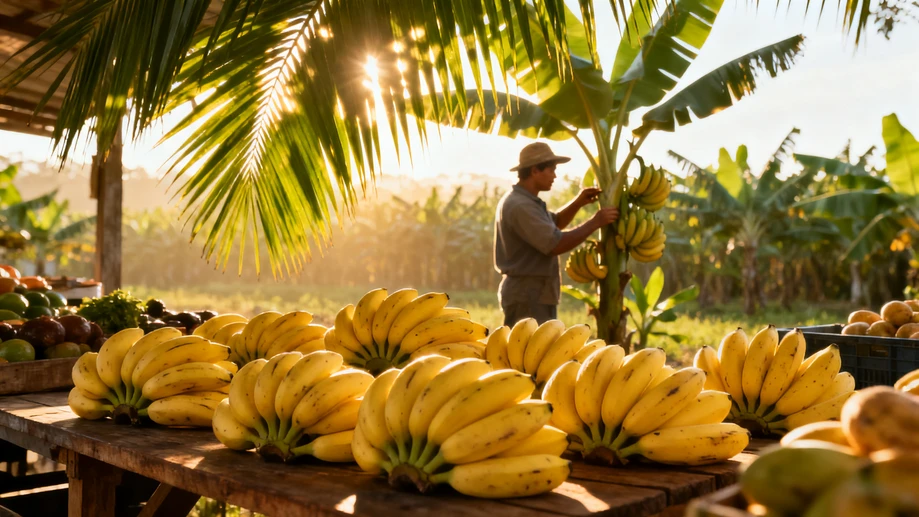
Are We About to Lose the World's Favorite Fruit?
The silent threat to bananas and why your breakfast might never be the same
Imagine a world without bananas. No creamy slices on cereal, no portable snacks, no banana bread. This scenario isn't science fiction—it's unfolding right now in banana farms across the tropics. A deadly fungus called Tropical Race 4 (TR4) is marching through plantations from Asia to Africa and Latin America, wiping out entire fields of the Cavendish bananas that fill our supermarkets. Unlike ordinary plant diseases, TR4 lives in soil for decades and can't be killed by fungicides. The Cavendish, representing 99% of exported bananas, is defenseless against this silent killer. Farmers watch helplessly as plants turn yellow and collapse, their livelihoods vanishing with each infected field. The clock is ticking for the fruit that has become a global dietary staple.
Bananas have faced extinction before. In the early 1900s, the Gros Michel variety—tastier and hardier than today's bananas—dominated global trade until another fungal strain wiped it out completely. The Cavendish saved the industry then because it resisted that earlier disease. But history repeats itself in cruel ways. TR4 emerged in Taiwan during the 1990s and has since spread to over twenty countries. Infected soil clings to boots, farm equipment, and even floodwaters, allowing the fungus to leap across continents. Australia declared a state of emergency in 2015 when TR4 reached its shores, while Colombian farmers burned entire plantations in a desperate attempt to contain its spread. The pattern is clear: where TR4 arrives, banana production eventually collapses.
Why does this matter beyond the fruit bowl? Bananas feed over 400 million people in developing countries as a crucial calorie source. In places like Uganda and Rwanda, people consume up to a pound of bananas daily. The industry employs millions worldwide, from small family farms in Ecuador to shipping workers in Costa Rica. Supermarket prices have already crept upward as production costs rise, but the real crisis looms in vulnerable communities. When Uganda detected TR4 in 2021, panic spread through villages where bananas provide 30% of daily calories. Scientists warn that without intervention, global banana production could drop by 50% within a decade, triggering both economic chaos and nutritional crises in tropical regions.
Hope grows in remote corners of the world. Researchers are racing to develop TR4-resistant bananas through natural crossbreeding programs. In the Philippines, farmers test hybrids created by combining hardy wild bananas from Southeast Asian jungles with commercial varieties. These experimental fruits look strange—some have red skins or apple-like crunch—but they carry precious resistance genes. Meanwhile, Australian scientists discovered that planting specific cover crops like ginger can suppress TR4 in soil by nurturing beneficial microbes. Other farmers adopt "banana hospitals," isolating infected plants with plastic barriers while boosting soil health with organic compost. These low-tech solutions buy precious time for genetic research.
The banana's future depends on diversity. Monoculture made the Cavendish vulnerable—a lesson we're learning too late. Farmers are rediscovering hundreds of forgotten banana varieties: Blue Java bananas with vanilla ice cream flavor in Hawaii, tiny sweet Lady Finger bananas in Thailand, and iron-rich cooking bananas across Africa. Consumer curiosity is growing too; specialty markets now sell pink-fleshed bananas and tart Fe'i bananas rich in vitamin A. While the Cavendish won't disappear tomorrow, its dominance is ending. The crisis teaches us that food security requires embracing biodiversity. Perhaps the next global favorite banana is already growing in someone's backyard, waiting for its moment in the sun.