
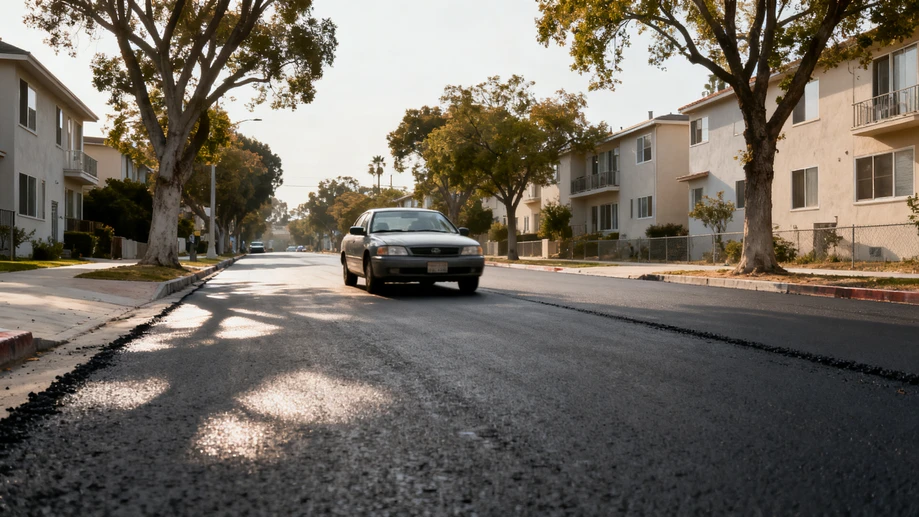
Have You Ever Wondered Why Your Car Drives So Differently Right After A Road Gets Resurfaced
This fun dynamic science piece unpacks the unexpected, easy-to-miss interactions between regular passenger vehicles and newly paved public roads that most drivers never stop to analyze.
Most people have had this exact experience at least once: you turn onto a street that local crews just finished repaving, and within a few seconds you notice something feels off. The car seems to hum a strange, high-pitched tune through the tires at 30 to 40 miles per hour, the steering wheel feels lighter than normal, and every tiny input you make to the wheel seems to translate to a movement far quicker than you are used to. A lot of drivers immediately pull over to check their tire pressure, or wonder if they accidentally shifted into a different driving mode without noticing, and write the odd experience off as a temporary glitch with their car. What they do not realize is none of these small changes have anything at all to do with their vehicle’s maintenance or settings, and every single one of these small quirks is a predictable result of basic physics playing out between rubber tires and fresh asphalt.
Freshly laid asphalt is not the smooth, uniform surface most people picture when they think of new roads. The mix of crushed rock, sand, and liquid bitumen is rolled flat while still hot, but the sharp, angular edges of the rock aggregate poke up slightly from the soft bitumen binder, and the top layer of the road has not been worn down by thousands of passing tires over weeks and months. For the first 500 or so vehicle passes, the soft bitumen layer is still slightly tacky, and the sharp aggregate edges catch on the tiny, micro-sized ridges on the surface of tire rubber that form from normal daily wear. This sticky, uneven contact does not follow the basic friction rules most people learned in high school physics, which treat a contact patch as a flat, solid surface. Instead, the rubber deforms very slightly to wrap around the sharp aggregate edges as the tire rolls, and this constant tiny stretching and releasing of the rubber creates that distinct singing tire noise that so many people mistake for a fault in their exhaust or wheel bearings.
The biggest surprise for most drivers is the obvious jump in steering response and perceived handling performance that they feel on fresh pavement, a difference that is so noticeable even people who know nothing about car performance can pick up on it immediately. Independent testing from automotive safety groups has found that newly resurfaced roads have up to 32 percent higher lateral grip than roads that have been in regular use for more than three years, because the sharp aggregate edges dig slightly into the gaps between tire tread blocks to lock the tire in place when you turn, instead of sliding slightly across the rounded, polished pebbles on old worn roads. This is the exact reason that most vehicle development teams actively seek out newly resurfaced public roads near their testing facilities to calibrate chassis and stability control systems, because the extra consistent high grip lets them measure the absolute peak performance a car can deliver without needing to rent an expensive closed test track.
Many drivers also report that their brake pedal feels very different on new pavement, with a softer, more even pulsing sensation when ABS activates instead of the harsh, choppy vibration they are used to on old roads. This change also is not a fault with the car’s brake system, it happens because new pavement has almost no variance in grip level across its entire surface. On older roads, you will find small patches of worn rubber, oil stains, small cracks, and polished aggregate that make the grip level shift constantly every few inches, so the ABS system has to rapidly adjust brake pressure dozens of times per second to keep the tires from slipping on low-grip patches. On new pavement with uniform grip, the system can hold a near-steady brake pressure for far longer, so the pulsing feedback sent through the pedal is far smoother and less jarring for the driver.
These small dynamic quirks also come with a very real, under-discussed safety tip that all drivers can benefit from knowing. For the first several days after a road is resurfaced, the top layer of bitumen binder has not fully cured and hardened, so small sticky flecks of the material will stick to passing tires and get wedged deep in the gaps of tire tread blocks. These small flecks do not do any permanent damage, but they fill up the tread’s water drainage channels, and can reduce wet weather grip by up to 20 percent if you drive straight from a new road into a deep puddle after driving over the fresh asphalt. This is the reason many experienced drivers will avoid sudden hard acceleration or sharp hard turns on brand new pavement, even if the extra grip feels fun, to avoid building up that temporary bitumen buildup that can cause unexpected slips later on.
This whole set of small, everyday interactions is such a perfect example of how much interesting, hidden dynamic science plays out under your wheels every single time you go for a drive, even on a totally routine trip to the grocery store. You do not need fancy equipment or specialized training to notice these little changes, you just need to pay a little extra attention the next time you turn onto a newly paved street, and you will pick up on all the small little quirks that almost all drivers miss on their regular commutes.