
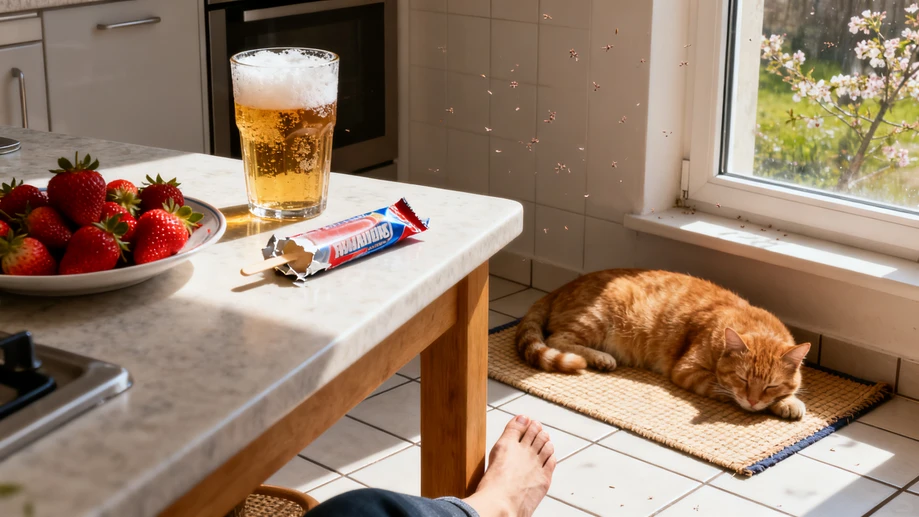
Did You Notice Your Favorite Summer Strawberry Dessert Is Way Less Sweet Than It Was 10 Years Ago
This easy-to-follow science feature breaks down the hidden, everyday impacts of gradual global climate change that most people miss amid busy daily routines
For a long time, most people picture global climate change as a distant scene of melting arctic glaciers, flooded coastal cities or extreme typhoon events covered on evening news, something far removed from the milk they pick up from the corner store and the weekend picnic they plan with friends. It is not until recent years that casual home bakers and street food visitors start to notice a tiny, hard-to-explain shift: the fresh local strawberries they buy for jam or fresh juice no longer carry that sharp, honeyed sweetness people remembered from childhood, even when the berries look bright red and perfectly ripe. Local small-scale fruit farmers have noticed this trend for more than a decade, as they track the temperature trends during the 3-week late spring harvest window for local strawberry varieties. Average temperatures during that exact growth period have climbed 2.3 degrees Celsius since the 1990s, and that extra sustained warmth speeds up the strawberry plants’ internal respiration rate, burning through the natural sugar content that would otherwise build up inside the ripening fruit. Even if farmers adjust their watering rhythm and apply extra nutrients carefully, they cannot fully offset this impact, and many have had to move up their harvest date by two full days to lock in as much remaining sweetness as possible, cutting out the final stretch of slow, sun-driven ripening that gives strawberries their signature rich flavor.
This small shift in strawberry sweetness is far from the only everyday clue that the local climate around you has been changing steadily, even if you never check the monthly average weather report. Most households with pet cats or dogs have noticed that their pets used to only lay flat on cool tiled floors during the hottest 2 weeks of mid-summer, but now they start sprawled out on cold tile from early May, refusing to move even for their favorite treats. The pet supply retail data across most mid-latitude regions shows that the fastest selling product category over the last five years is not fancy interactive cat toys or premium organic pet food, but low-cost pet cooling mats and thin breathable pet cool pads designed for placement in shaded spots. The owners of neighborhood convenience stores also confirm that the large freezer full of ice pops used to only be moved to the prominent spot right by the front door at the end of April, but now it has to be set out in mid-March, otherwise dozens of customers will walk in every week asking if they have cold frozen treats for sale. The record high late spring temperatures that have popped up over the last three years are so consistent that many elderly residents who used to wear light jackets well into May have started pulling out short sleeved shirts much earlier than they used to 20 years ago.
Many other people have noticed another even more personal effect that shows up in their own bodies: the seasonal spring allergy season now lasts almost two full months instead of the three week window most people remembered 20 years ago. A lot of people who never used to have seasonal allergies now find themselves sneezing nonstop from early March to the end of May, when pollen from cypress trees, birch trees, grass and mugwort floats through the air one after another. Even when they wear two layers of face masks outside and change their clothes immediately after returning home, they still end up with itchy red eyes and a stuffy nose that lasts for weeks. Public health data collected across North America, Europe and East Asia shows that average regional pollen concentration is 21 percent higher than 1990 levels across North America and Europe, while many cities in East Asia have seen a more than 30 percent jump in total pollen count during spring. Milder, shorter winters let all the flowering and pollinating plants wake up weeks earlier than their historical growth schedule, extending the total pollen dispersal period by nearly 30 percent on average. You do not need a fancy lab instrument to measure that change, because your own itchy nose and scratchy throat works as a far more sensitive real time detector.
Even the cold frosty beer you grab to sip on a warm summer evening has been quietly impacted by these gradual temperature shifts. Hops, the bitter aromatic plant that gives beer most of its signature layered flavor, is extremely sensitive to small changes in average summer temperature. The core hop growing regions in central Europe have seen average growing season temperatures rise more than 1.8 degrees Celsius over the last decade, and independent brewers report that the raw hops harvested from these traditional areas have lost nearly one third of their natural aromatic concentration. A lot of craft beer makers now have to buy 20 to 30 percent more raw hops to add to each batch to hit the same flavor profile they had 10 years ago, driving up production costs quietly. As a result, the price of most popular craft beer offerings has crept up by 20 to 30 percent over the last 5 years, and regular bar patrons often ask owners if they have started to pour smaller servings, never guessing that the slightly weaker flavor and higher price tag traces directly back to small temperature shifts thousands of miles away in remote hop farming valleys.
This feature does not push for grand, overwhelming lifestyle changes that feel impossible for regular people to keep up with. The point of pointing out these tiny everyday changes is to prove that climate change is no longer some distant hypothetical disaster scenario that only shows up in disaster movies or long scientific reports. It lives in every bite of slightly less sweet strawberry you eat, in the sight of your cat spread out on the cool kitchen tile, in the extra pack of allergy pills you add to your spring grocery list, and the slightly muted hop flavor you taste in your summer beer. Small consistent daily choices, like turning off unused electronics when you leave a room, taking public transit for short trips instead of driving alone, and planting a few native flowering plants in your balcony planter, are all small steps that add up to protect the familiar soft, enjoyable small daily moments you love the most.