
Have you ever noticed the exact same instant drink powder dissolves far faster at chain coffee shops than at home
A set of underrated physical chemistry process optimizations widely used in modern food manufacturing quietly bring unnoticeable convenience to billions of people’s daily lives
Most people have run into this exact trivial situation countless times in daily life. You buy a bag of branded instant cocoa or milk tea powder from the supermarket, pour it into a mug and add milk of the exact same temperature the barista uses, only to end up seeing piles of dry, hard lumps form on the surface. You have to stir nonstop for two to three minutes to break those lumps apart, and you will often find a thin layer of undissolved dry powder left sticking to the bottom of the mug even after all the stirring work. You may have assumed the barista has some secret stirring trick that no one tells ordinary consumers, or that the chain stores get a special premium version of the product that is never sold in retail markets, but the actual truth behind this obvious difference has nothing to do with hidden recipes or exclusive supply chains, and it all traces back to a simple physical chemistry engineering improvement that has been widely used for more than 40 years.
The unprocessed instant powder directly coming out of early production lines has fully dense, solid particle structures. The moment those compact dry particles make contact with water, the hydrophilic molecules on their outer surface dissolve quickly, while the hydrophobic components inside the particles will stick together immediately and form a thin, water-repellent membrane that wraps up all the undissolved dry powder trapped inside. This well-documented mass transfer phenomenon is the exact cause of those annoying hard lumps that refuse to break apart no matter how long you stir. Physical chemistry and process engineers spotted this common problem decades ago, and they did not make any change to the original ingredients of the product at all, they only adjusted two tiny parameters in the final spray drying procedure of the production line.
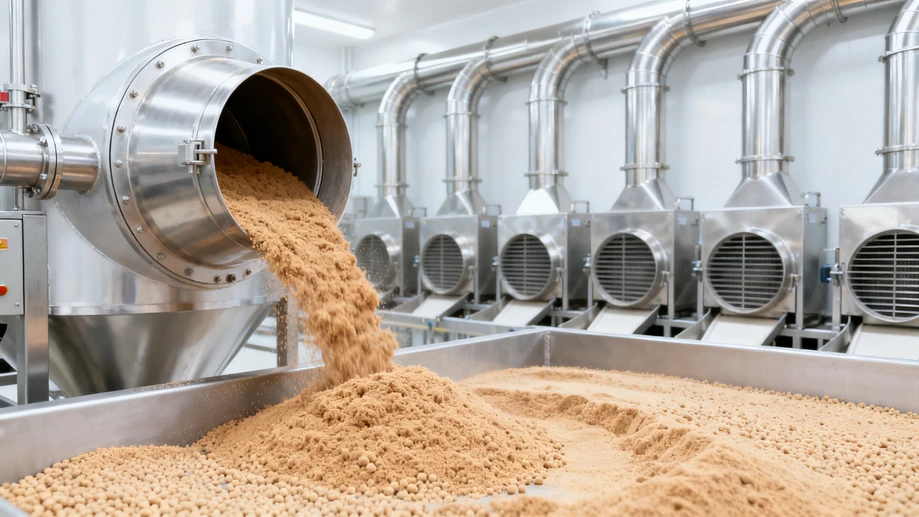
By slightly lowering the inlet air temperature by 12 degrees Celsius and slowing down the raw material feeding speed by 30 percent, the original fully dense, solid powder particles will turn into tiny, porous hollow agglomerates that are full of micro-sized vent holes spread all over their surface. When these restructured particles touch any type of liquid ranging from cold water to boiling milk, the liquid can seep into the entire inner structure of each particle in less than 10 milliseconds through those tiny pores evenly distributed on the surface. The water never gets blocked by that thin water-repellent membrane formed by fast-dissolving surface molecules, so the whole powder can fully disperse and dissolve with just a few gentle shakes, no extra strenuous stirring required. This tiny adjustment only pushes the total production cost of each ton of instant powder up by roughly 1.8 percent, but it cuts the average preparation time of each cup of instant drink by 72 percent, which directly boosts the peak hour order processing efficiency of every chain coffee shop by over 100 percent.
This type of almost invisible process optimization based on basic physical chemistry principles is everywhere in ordinary household products, and most consumers never notice their existence at all. The anti-spot function of common household dishwasher rinse aid, for example, comes from a surface tension adjustment that process engineers worked out through hundreds of rounds of practical testing. The treatment changes the surface tension of the final rinse water to a specific value, so the remaining water droplets on the surface of cleaned dishes will spread out automatically into an ultra-thin even water film that leaves no mineral trace after full evaporation. The non-sticky quick-drying texture of common hand sanitizer foam also comes from a refined gas-liquid mass transfer optimization in the industrial foaming process, which ensures the foam spreads evenly on the hand skin without gathering into heavy, sticky clumps.
These small, cost-effective technical improvements are never as eye-catching as those fancy new materials or high-profile cutting-edge research projects, but they deliver tangible benefits to more than half of the global population every single day. They do not require rare expensive raw materials or highly specialized complicated manufacturing equipment, all the engineers did was to apply classical mass transfer and fluid dynamics principles to the production process of the most ordinary consumer goods, to solve trivial small annoyances that most people do not even bother to mention. This is the core charm of applied physical chemistry and chemical engineering, it turns abstract, seemingly boring academic theories into tiny daily conveniences that quietly make everyone’s life a little smoother.