
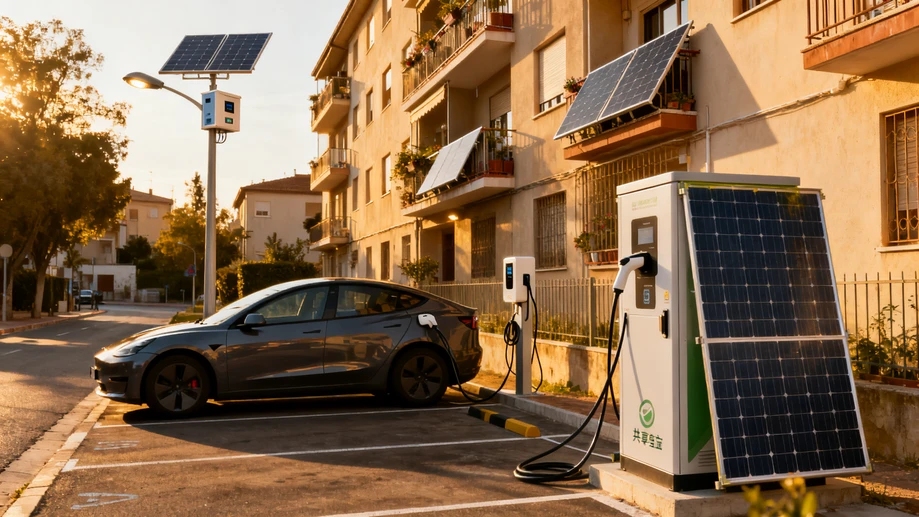
Did You Know The New Energy Gadgets You Use Daily Are Way More Clever Than You Thought
This casual science piece breaks down hidden, little-known fun facts about everyday new energy applications that fit right into your normal daily routines without any fancy high-tech jargon.
Most people’s first impression of new energy involves massive wind turbines standing tall on empty grasslands, endless rows of solar panels spread out across sun-baked deserts, or huge hydroelectric dams spanning wide rivers thousands of miles away from their home. Very few people realize new energy systems have already woven themselves into every tiny part of their regular daily lives, often operating so quietly that they never even notice its existence. The first sip of boiling water you make after waking up on a weekend morning might very well be heated by excess solar power generated from the rooftop panels of the residential building opposite yours, transmitted through the local community micro-grid without you paying any extra fees for the green energy. Many urban residential communities built in the last three years have added distributed photovoltaic panels on the exterior of public corridors, elevator shafts and even over outdoor parking shades, and the power they generate first covers all public area electricity needs before feeding leftover electricity back to the residential users, which has cut the average household electricity bill by 7 to 12 percent across more than 200 pilot communities in East Asia in the last two years.
If you own a battery electric vehicle, you are already holding a hidden portable power station without even realizing it. Most modern home bidirectional chargers do far more than just fill your car battery with electricity at night when grid electricity prices are at their lowest. The smart system built into the charger can automatically detect peaks in home electricity use, and send small amounts of power back from the car battery to your home circuit for a few hours when you are not driving. Imagine you are hosting a small house party with a running oven, a full-size audio system, a large projector and multiple charging phones, all drawing large amounts of power at the same time, and the regular home circuit almost hits its load limit. The system will quietly pull just enough stored power from your parked car to cover the excess demand, and you will never even notice the small adjustment taking place behind the scenes. In some cities that experience occasional short summer peak power cuts, many families who own bidirectional chargers never even have to dig out old portable power banks for temporary use, as the car battery can easily keep all necessary household appliances running for more than 4 hours.
Even the ordinary solar street lights you walk past every day on your way to work are far more functional than you might assume. The newest generation of public street lights installed in most urban districts do not just store daytime solar power to light up the road at night. Each light pole has a small built-in energy storage module, and all these storage modules are connected to the local district power network. When summer temperature spikes and nearby commercial areas run extra air conditioners that create a small temporary power gap, the local grid operation center can pull a tiny portion of the stored power from thousands of street light modules to fill the gap, without turning down the brightness of street lights at all. A pilot project run in a downtown district of Hangzhou, China in 2023 proved that this scattered pool of street light stored energy could cover 13 percent of the temporary peak power demand of the surrounding 12 blocks, which removed the need for planned short term power cuts that used to trouble local shop owners every summer.
Even the shared power banks you rent from time to time when your phone runs out of battery use new energy systems that most people never spot at first glance. Most new outdoor shared power bank cabinets installed in city parks, commercial pedestrian streets and scenic spots are covered with a thin layer of flexible photovoltaic film on their outer surface that looks no different from ordinary matte black plastic panels, plus a tiny micro wind turbine installed at the top of the cabinet. On a sunny and breezy day, this small combined new energy system can generate enough electricity to power the whole cabinet for 3 full days without drawing any power from the public grid. The annual green power generated from one single outdoor shared power bank cabinet can reach up to 280 kilowatt hours, which is enough to charge a smartphone more than 1800 times. Hundreds of thousands of these cabinets scattered across urban areas make up a huge hidden distributed new energy network that almost no one pays attention to.
The best part of all these scattered new energy applications is that they do not require any large, eye-catching construction project that disrupts your daily life at all. In the coming few years, you will see flexible solar films added to the top of shared e-bike seats, small thin photovoltaic strips built into the edge of outdoor camping canopies, and even small kinetic energy collection panels installed under the pedestrian tiles of busy subway entrances that collect tiny bits of energy from the steps of passing crowds. All these tiny, almost invisible new energy collection points will eventually link together to form a soft, low-carbon power system that fits perfectly into your daily life, and most people will never even realize that their regular daily habits are already supporting a greener power future without any extra effort on their part.