
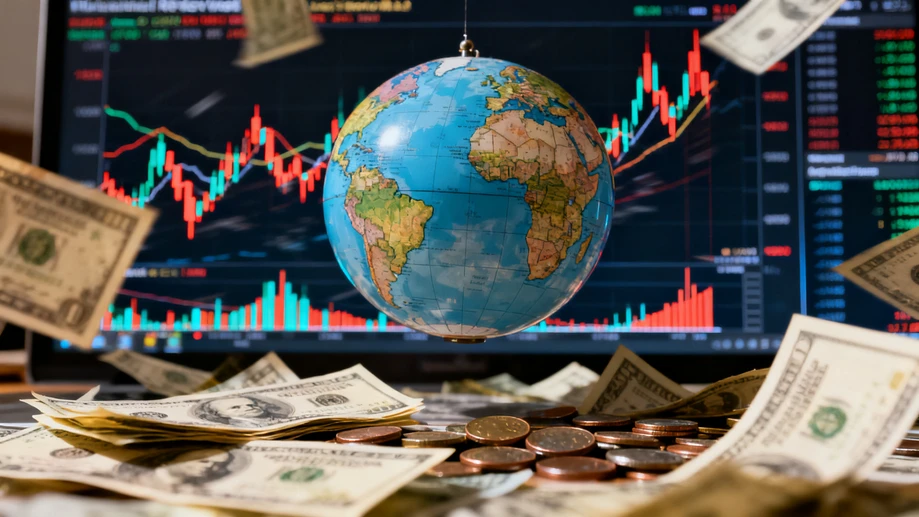
The Global Financial Rollercoaster Never Stops!
Unraveling the Thrilling Ups and Downs of International Markets in Everyday Life
Imagine waking up to news that the price of your morning coffee has doubled overnight, or that your savings are suddenly worth less due to wild currency swings. This isn't science fiction—it's the real-world drama of today's global economy, where markets behave like a never-ending rollercoaster ride. From soaring inflation to sudden stock crashes, the financial world is full of twists and turns that affect everyone, whether you're buying groceries or investing online. The core of this chaos lies in interconnected systems: when one country faces economic turmoil, it ripples across borders, turning everyday transactions into high-stakes adventures. Understanding these forces doesn't require a finance degree; it's about seeing how global events, like supply chain snags or policy shifts, create waves we all ride. By exploring this thrilling journey, we can better navigate our own financial lives and appreciate the sheer unpredictability that makes the economy so fascinating.
Inflation is the invisible force that quietly erodes purchasing power, turning what used to be affordable luxuries into budget-busters. Picture this: a simple loaf of bread costs more because of rising energy prices or crop failures in distant regions, all tied to global demand and climate events. This phenomenon isn't just numbers on a screen; it stems from factors like excessive money printing by central banks or disruptions in international trade. For instance, when major economies like the US or Europe inject stimulus funds, it can lead to higher prices worldwide, affecting everything from rent to electronics. The ripple effect is real—supply shortages in one area, say microchips from Asia, delay car production in Europe, pushing up costs. By demystifying inflation, we see it as a natural outcome of supply and demand imbalances, not a mysterious curse. This knowledge empowers us to make smarter choices, like diversifying investments or opting for local goods to cushion the blow.
Supply chain disruptions add another layer of excitement, transforming routine shopping into a treasure hunt. Remember the pandemic-era scramble for toilet paper or electronics? That was a global supply chain in chaos, where factory shutdowns in China or shipping delays in the Suez Canal caused shortages everywhere. These events highlight how interconnected our world is: a storm in a key port can halt deliveries, leading to empty shelves and higher prices. It's not just about goods; services like streaming or cloud computing rely on global networks, so a cyberattack on one server farm can disrupt millions. The fun part? Innovations are emerging to tackle this, such as AI-driven logistics that predict bottlenecks or sustainable sourcing that reduces reliance on volatile regions. By learning about these chains, we gain insights into why some products vanish and reappear, turning everyday errands into lessons in resilience and adaptation.
Cryptocurrencies bring a digital twist to the financial rollercoaster, offering high rewards but dizzying risks. Think of Bitcoin or Ethereum as virtual gold rushes, where values can skyrocket or plummet in hours based on tweets or regulatory news. This volatility isn't random—it's fueled by factors like investor speculation, energy consumption debates, or government crackdowns in countries like China. For average users, buying crypto feels like betting on a high-speed race; one day, your digital wallet grows, the next, it crashes due to a hack or market panic. Yet, it's not all gamble: blockchain technology behind these coins promises secure transactions and financial inclusion, making it a revolutionary force. By examining this space, we uncover how digital currencies are reshaping money, from enabling cross-border payments to challenging traditional banks. It's a wild frontier where caution and curiosity go hand in hand.
Geopolitical tensions act as the ultimate thrill-makers, turning trade wars or conflicts into economic earthquakes. Consider how sanctions on a major oil producer can send gas prices soaring globally, impacting commutes and household budgets. Events like the Russia-Ukraine war disrupt energy flows and grain supplies, showing how politics and economics collide. This isn't distant history; it's current affairs where tariffs or alliances shift markets overnight, creating winners and losers. The intrigue lies in the domino effect: a diplomatic spat can lead to currency devaluations or stock sell-offs, affecting retirement funds and business loans. By understanding these dynamics, we see the economy as a global chessboard, where moves in one corner change the game everywhere. It encourages us to stay informed and adaptable, turning news headlines into actionable insights for personal finance.
Despite the chaos, the financial rollercoaster offers hope through innovation and recovery. Green energy investments, for example, are booming as countries shift to sustainable sources, creating jobs and stabilizing markets after crises. Tech advancements like AI in trading apps help predict trends, making investing more accessible and less intimidating. This resilience shows that downturns often spark comebacks, with global cooperation on issues like climate or trade fostering stability. By embracing this journey, we learn that volatility isn't all doom—it's a chance for growth, teaching us to diversify, save wisely, and enjoy the ride. After all, in a world where economies constantly evolve, staying curious turns financial news from scary to exhilarating, proving that the thrill of the unknown is what keeps us all hooked.