
5 Invisible Space Inventions That Run Your Daily Life
From your morning coffee to bedtime scrolls, cosmic tech hides in plain sight
When you sip filtered water or check your smartphone's weather app, you're touching the stars. Literally. NASA's Apollo missions and International Space Station research have quietly revolutionized Earth-bound existence through unexpected technological spinoffs. Over 2,000 space-derived innovations now permeate our homes, hospitals, and highways. These aren't sci-fi fantasies but practical solutions born from solving extraterrestrial problems – like keeping astronauts alive in vacuum – that serendipitously solved terrestrial ones. The vacuum cleaner roaring in your living room and the shock-absorbing sneakers on your feet share DNA with moon landings and Mars rovers. This cosmic crossover happens because space forces engineers to confront extreme challenges: recycling every drop of water, creating unbreakable materials, and building miniature supercomputers. Their ingenious answers didn't stay locked in rockets but trickled down to supermarkets and pharmacies in startling ways.
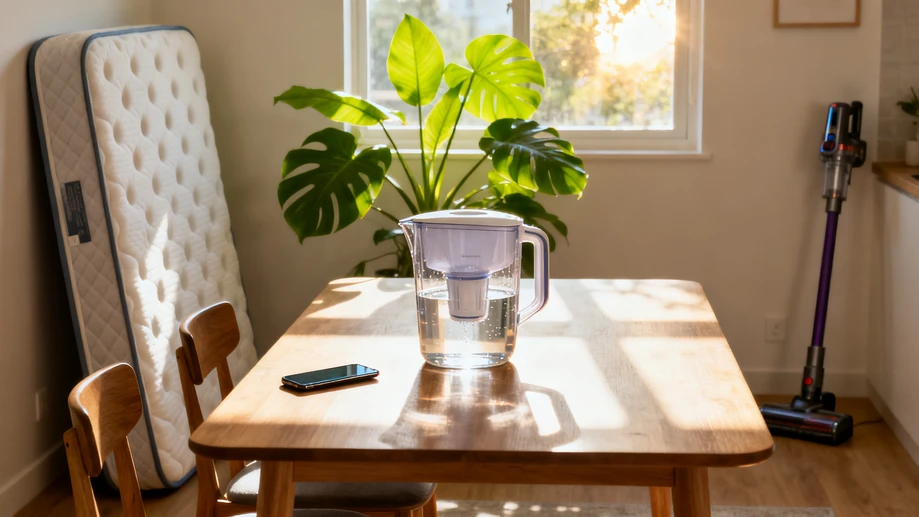
Consider your memory foam mattress, that cloud-like sanctuary after a long day. Its origin story begins with 1960s NASA scientists trying to cushion astronauts during violent rocket launches. They developed temperature-sensitive "slow springback foam" that evenly distributed pressure – a technology now cradling millions of sleepers worldwide. Similarly, the wireless headset you use for calls emerged from Neil Armstrong's need for hands-free communication on the moon. Today's Bluetooth earbuds descend directly from those lunar microphone designs. Even your kitchen benefits: the scratch-resistant lenses on your glasses use diamond-hard coatings invented to protect satellite sensors from space debris. These aren't minor tweaks but fundamental reimaginings of materials science, proving that solutions for surviving 250 miles above Earth often work even better in your apartment.
Healthcare hides the most astonishing space-age secrets. Digital image sensors – originally created to miniaturize cameras for interplanetary probes – now enable smartphone photography and dental X-rays with unparalleled clarity. More crucially, NASA's research into monitoring astronaut vitals led to laser-based breast cancer detection systems, spotting tumors earlier than traditional mammograms. Your gym's air-purifying system? Adapted from spacecraft technology that scrubs ethylene to keep orbital greenhouse plants alive. Perhaps most remarkably, the precision radiation therapy destroying cancer cells in hospitals worldwide evolved from instruments designed to study cosmic rays on the ISS. These medical miracles demonstrate how exploring the void between stars directly saves lives on our planet.
Environmental breakthroughs also orbit back to space labs. Water purification systems using ionization – now providing clean drinking water to remote villages – were pioneered for recycling astronaut sweat and urine into potable liquid on year-long ISS missions. Solar panel efficiency leaped forward thanks to materials tested on satellites exposed to brutal solar radiation. Even disaster relief leverages cosmic tech: satellite-based soil moisture monitors predict droughts and floods months in advance, while lightweight emergency shelters use reflective insulation developed for Mars habitat concepts. Your GPS-guided morning jog connects to atomic clocks on orbiting satellites, another space-spawned marvel. These innovations form an invisible safety net, protecting us from environmental crises through eyes in the sky.
As you read this on a device glowing with LED-backlit screens (another NASA spinoff), remember that space technology isn't just about rockets. It's the reason your shoes grip wet pavement, your baby's formula contains enriched nutrients, and firefighters see through smoke with infrared cameras. The next time you adjust your wireless thermostat or open your smartphone's weather radar, smile – you're commanding a little piece of interstellar ingenuity. Over fifty years of cosmic exploration has woven itself into humanity's fabric so completely that we've stopped noticing the threads. Yet these quiet revolutions keep unfolding, as today's experiments aboard the ISS germinate tomorrow's everyday wonders. Our greatest adventure hasn't just taken us outward; it's transformed life right here at home.