
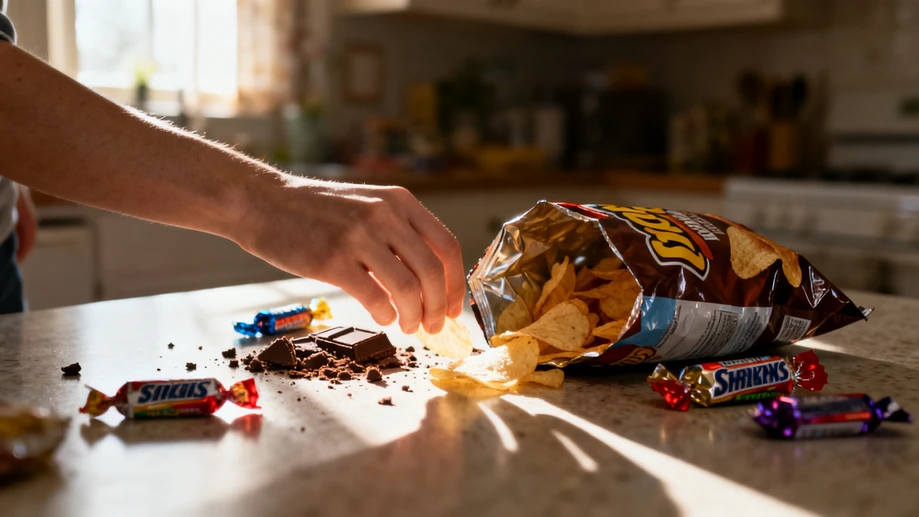
Can't Stop Snacking? Blame Your Brain!
The delicious science behind our cravings and how to outsmart them
You finish a full meal, feel completely satisfied, yet find your hand mysteriously reaching for that bag of chips. Why do certain foods wield such power over our willpower? This isn't just lack of discipline; it's a complex neurochemical tango playing out inside your skull. Our brains come factory-equipped with ancient reward circuits that were designed to ensure our ancestors didn't starve, not to navigate supermarket snack aisles. Modern science reveals that junk food hijacks these primal pathways with alarming efficiency, triggering cravings as potent as any addiction.
Inside this neural battleground, the neurotransmitter dopamine takes center stage. When we bite into fatty, sugary, or salty foods, our brain releases dopamine – the same "feel-good" chemical activated by pleasurable experiences like social bonding or achievement. Highly processed foods cause unusually large dopamine surges, rewiring our reward system over time. Brain scans show that consistent junk food consumption actually decreases dopamine receptors, meaning we need more chips, cookies, or candy just to experience the same level of satisfaction. It's a physiological trap masquerading as a treat.
Evolutionary biology explains why this system backfires today. Humans developed insatiable cravings for calorie-dense foods during millennia of scarcity – a lifesaving trait when starvation was a constant threat. Those who efficiently sought out sweet berries or fatty meats survived. Unfortunately, our brains still treat every chocolate bar like a life-saving discovery, even though we now live surrounded by constant abundance. Food manufacturers exploit this innate vulnerability by engineering "hyper-palatable" combinations of sugar, fat, and salt that perfectly hit our neurological sweet spots.
Environmental cues stealthily sabotage our resistance too. Studies demonstrate that the sight of food packaging, advertisements, or even familiar locations can trigger dopamine release before a single bite is taken. Ever notice how walking past your favorite bakery makes your stomach rumble? Scientists call this "conditioned hypereating" – where context alone, like watching TV or driving past a fast-food outlet, becomes linked to cravings. External triggers become so powerful that the mere scent of popcorn can override feelings of fullness.
Fortunately, neuroscience offers practical strategies to reclaim control. Start by identifying your personal trigger foods – those you can't stop eating once started – and avoid keeping them at home. Opt for healthier "gateway snacks" like flavored nuts or dark chocolate squares that satisfy cravings without overwhelming brain chemistry. Strategic distraction works wonders; a fifteen-minute walk or puzzle game disrupts craving signals by engaging different brain regions. Even improving sleep quality helps regulate the hunger hormones ghrelin and leptin, making cravings less intense.
Understanding the battle isn't fought in your stomach but within your neural pathways brings empowerment. By recognizing food cravings as biological processes rather than personal failings, we can approach them with science-backed techniques. The next time a junk food craving strikes, remember: it's not your character being tested, but your prehistoric brain chemistry meeting a modern world filled with edible temptations engineered for maximum neurological impact.