
Is This Glowing Ocean Real or Just a Myth?
Unveiling the Astonishing Secrets of Bioluminescence in Our World's Waters
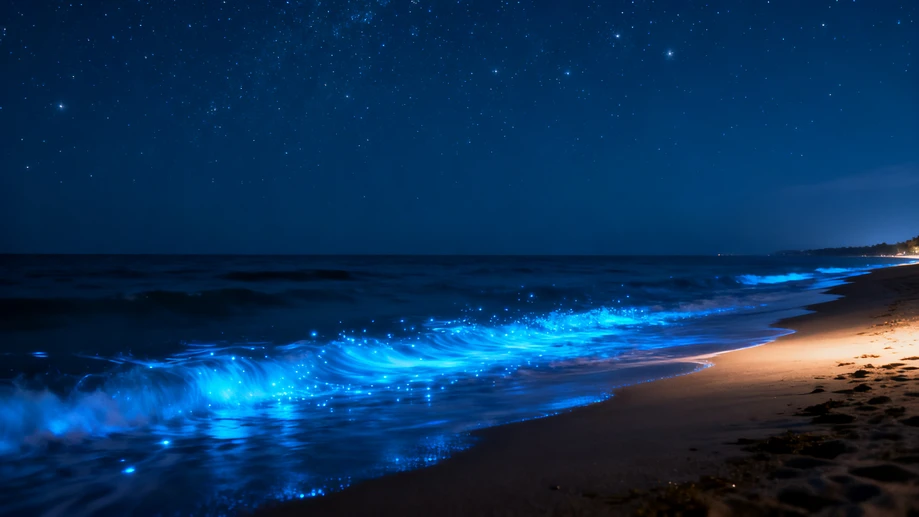
Imagine standing on a moonlit beach, waves lapping at your feet, when suddenly the water erupts in a dazzling blue glow—like stars fallen to Earth. This isn't science fiction; it's a real natural phenomenon called bioluminescence, and it occurs in oceans worldwide, from the Maldives to California. For centuries, sailors mistook these shimmering displays for mythical sea monsters or divine omens, but today, science reveals them as nature's own light show. Bioluminescence happens when tiny marine organisms, such as plankton or algae, produce light through chemical reactions, often triggered by movement or stress. It's a survival tactic: the glow can startle predators or attract mates in the dark depths. This spectacle isn't just rare—it's a reminder of Earth's hidden wonders, drawing tourists and scientists alike to witness its ethereal beauty firsthand. In a world filled with screens and artificial lights, experiencing this natural radiance feels like stepping into a living fairy tale.
At its core, bioluminescence is a biochemical marvel. The process involves a molecule called luciferin reacting with oxygen, catalyzed by an enzyme named luciferase, to emit light without heat—a phenomenon known as "cold light." This efficiency is unmatched by human technology; for instance, a single dinoflagellate plankton can produce flashes brighter than a firefly. Scientists estimate that over 75% of deep-sea creatures use bioluminescence, from anglerfish with their glowing lures to jellyfish that pulse like underwater lanterns. The colors vary: blue and green dominate in oceans because these wavelengths travel farthest in water, while some fungi on land emit eerie green glows in forests. Researchers study this for practical applications, such as medical imaging tools inspired by the glow, but the real magic lies in its unpredictability. Storms or boat wakes can ignite entire bays, turning the sea into a liquid galaxy. This isn't just a quirk of nature—it's a testament to evolution's ingenuity, proving that reality can outshine fantasy.
One of the most iconic examples is the "Sea of Stars" in Vaadhoo Island, Maldives. Here, during warm summer nights, the shoreline blazes with electric blue waves as millions of Noctiluca scintillans plankton light up. The effect is so intense that footprints in the sand seem to sparkle, and swimmers leave trails of light like celestial comets. Locals share tales of this glow guiding lost fishermen home, while scientists attribute its intensity to nutrient-rich currents and low pollution. Similar displays occur in Puerto Rico's Mosquito Bay, dubbed the brightest bioluminescent bay on Earth, where kayaking through the water feels like paddling through stardust. But it's not just tropical paradises; even colder regions like Norway's fjords witness green glows from comb jellies. These events are fleeting, often lasting only hours, and depend on factors like water temperature and lunar cycles. Climate change threatens them, as rising temperatures can disrupt plankton blooms, making each sighting a precious, ephemeral gift from nature.
Beyond oceans, bioluminescence appears in unexpected places. In New Zealand's Waitomo Caves, glowworms dangle from ceilings like living constellations, luring insects with their blue light to trap them in sticky threads. On land, forests in Brazil and Japan host "foxfire"—fungi that emit a soft green radiance on decaying wood, creating ghostly paths at night. Even fireflies in North America put on synchronized light shows in summer, with thousands flashing in unison to attract mates. These phenomena aren't just beautiful; they serve vital roles in ecosystems. For example, the glow helps decompose organic matter or pollinate plants in darkness. Humans have harnessed this wonder too: in Japan, festivals celebrate firefly viewing, while photographers capture long-exposure shots that turn beaches into surreal paintings. Yet, many remain unaware of how common bioluminescence is—it's estimated that 90% of deep-sea species use it. This ubiquity makes it a global treasure, accessible to anyone who ventures out on a clear night, proving that magic exists in our everyday world.
Why does this matter for us? Bioluminescence offers lessons in sustainability and wonder. It reminds us of nature's fragility; pollution from plastics or oil spills can smother light-producing organisms, dimming these displays. In places like Florida's Indian River Lagoon, conservation efforts are reviving glows by reducing runoff. But more than that, it sparks curiosity and joy. Families gather on shores, children squeal as waves light up, and researchers uncover new species, like the recently discovered "twinkling" squid in the Pacific. This phenomenon bridges cultures—indigenous stories from Australia to Alaska speak of glowing seas as spiritual guides. In an age of climate anxiety, witnessing bioluminescence fosters hope; it shows that Earth still holds mysteries worth protecting. So next time you're near the water at night, look closely. You might just catch a glimpse of nature's own fireworks, a silent symphony of light that whispers: the extraordinary is all around us, waiting to be seen.