
Did You Know These Hidden New Energy Tricks Are Already Powering Your Daily Life?
From your morning coffee run to late-night phone charging, unexpected renewable energy uses are quietly making your daily routines greener without you noticing.
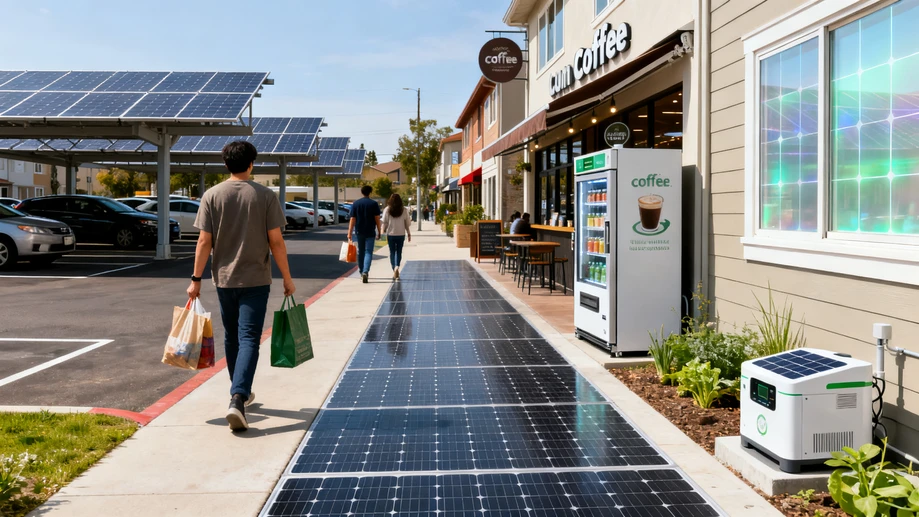
Most people still picture new energy as massive, distant facilities: thousands of shimmering solar panels spread across barren deserts, hundreds of towering wind turbines spinning on remote hilltops, or giant hydroelectric dams holding back miles of river water. But the vast majority of new energy deployments today are small, unobtrusive, and woven directly into the spaces you visit every single day, so seamless you never stop to notice them. The parking lot of the grocery store you stop at after work likely has rows of solar panels built into its overhead shade canopy, generating more than enough electricity to power all the store’s exterior refrigerated display cases, the electric vehicle charging spots for shoppers, and even the automatic sliding front doors. A leading North American grocery chain reported last year that 68 percent of its suburban locations run 100 percent on this on-site solar power during daytime operating hours, cutting their reliance on grid energy for refrigeration by nearly 40 percent annually. Even the shared rental bike you grab for a quick trip to the subway draws all its lock and GPS signal power from a thin, flexible solar panel embedded under its basket, no wired charging or routine battery swaps required to keep it running 365 days a year.
Many of the sidewalks you walk across on your daily commute also hide tiny new energy components that work without anyone’s awareness. The new-style textured paving tiles rolled out in dozens of mid-sized cities across the world combine a thin, weather-resistant solar film on their top surface with small piezoelectric modules under the concrete layer. The solar film captures even weak, overcast daylight to generate low levels of electricity, while the piezoelectric units produce small bursts of power every time a pedestrian steps on the tile. All the collected power feeds directly into the street’s public system, running the streetlights after dark, the pedestrian crosswalk signal buttons, and the free shared charging stations for mobile phones mounted on nearby lamp posts. A 2023 pilot project on a busy downtown shopping street in Manchester, UK, found that these modified tiles supplied 100 percent of the street’s public lighting needs for 11 months of the year, eliminating the need to run new power lines for public fixtures and cutting the local city council’s public utility costs by more than 70 percent on that stretch of road.
Even the food waste you toss in the kitchen trash can contribute to local new energy systems right where you live, no long-distance transport to a large industrial biogas facility required. Thousands of new residential apartment complexes have installed compact, on-site food waste processing units that take all the fruit peels, leftover takeout, coffee grounds and uneaten scraps collected from building trash bins, ferment them in a sealed, odor-free tank to produce small amounts of biogas. That gas is piped directly to the building’s shared public hot water heater, the community barbecue grills in the backyard patio, and the power supply for the shared laundry room dryers. One 320-unit apartment complex in Portland, Oregon, ran a 12-month test of this system in 2024, and found that the biogas produced from its residents’ food scraps covered 82 percent of the building’s public hot water needs for the entire year, eliminating 12 tons of carbon emissions that would have come from using natural gas for the same purpose. The leftover solid material from the fermentation process is then turned into nutrient-dense compost for the building’s community garden, creating a fully closed, zero-waste loop that no resident even has to interact with beyond sorting their food scraps into a dedicated small bin.
Some of the smallest new energy innovations are now being built right into common consumer products that you would never associate with renewable power. The semi-transparent thin solar film that many new apartment buildings now apply to their standard window glass does not block natural sunlight from coming into the unit, but it captures the invisible diffuse light that passes through the glass to generate small amounts of electricity. That power runs wall-mounted smart temperature sensors, automated window blind motors, wireless doorbells, and indoor air quality monitors completely off-grid, so none of these small smart home devices ever need their batteries replaced. The average standard 6-foot tall apartment window with this film installed generates roughly 28 kilowatt hours of electricity a year, which is more than enough to cover the total annual power draw of all those small low-power smart devices combined. Even the casual travel backpacks many people use for weekend day trips now have thin flexible solar strips sewn into the shoulder straps, so walking outside for an hour on a partly cloudy day produces enough power to fully charge a pair of wireless earbuds three separate times, no wall plug required.
All these small, scattered new energy sources also work together to make the entire local power grid far more stable and reliable than most people realize. Many of the high-capacity portable power packs people buy for camping trips and backyard parties are built using repurposed electric vehicle batteries that still hold 70 to 80 percent of their original capacity, far cheaper than manufacturing brand new energy storage units. When people are not using these packs for personal events, they can be connected to small shared docking stations in apartment building lobbies or community centers, feeding their stored excess solar power back into the local grid during peak evening usage hours when everyone is cooking dinner, streaming shows and charging their phones. This distributed, community-focused new energy system does not require massive, expensive infrastructure upgrades to work, and it lets regular people contribute to a greener power grid without ever installing a big, obtrusive rooftop solar panel array on their home. Over the next five years, industry analysts estimate that 40 percent of all new energy capacity added globally will be these small, hidden, everyday use systems, not the giant remote power plants that most people think of when they hear the term new energy.