
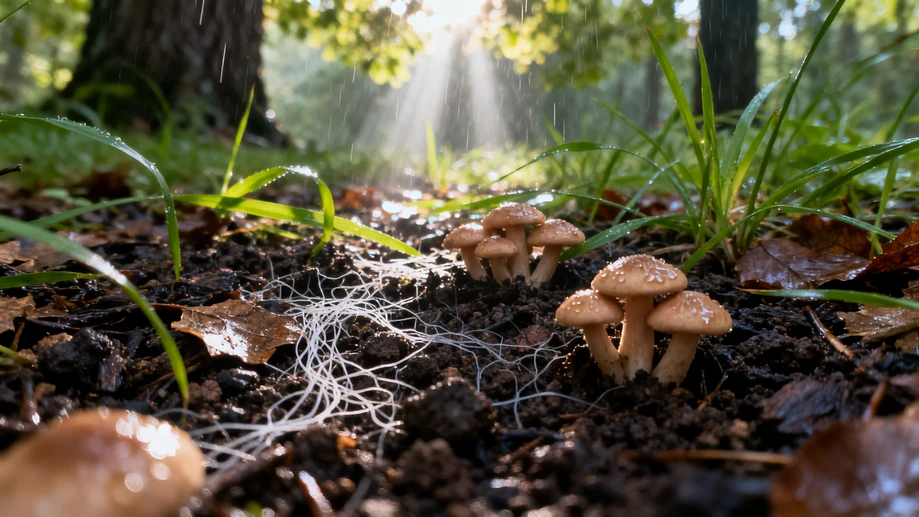
Do the tiny wild mushrooms growing under your backyard oak tree have secret superpowers no one has ever told you about
A year of casual field tracking by community naturalist groups across North America reveals dozens of charming, under-documented survival behaviors common to the ordinary fungi most people walk right past every day
Most people who step out their back doors after a soft autumn rain barely glance at the cluster of pale brown mushroom caps pushing up through the mulch at the base of their oldest oak tree. They write the small growths off as nothing more than a temporary, harmless quirk of damp weather, something that will shrivel up and vanish in three days once the sun comes out full force, with no greater purpose than dropping a few spores to make more mushrooms next season. But the 12 months of observation compiled by volunteer naturalists from 17 different local community nature groups tells a far more vivid story, one that frames these unassuming little fungi as quiet masterminds running an entire hidden network that ties every living thing in the small local ecosystem together. None of the observations required fancy equipment to make, either: every volunteer only used a cheap digital camera, a small notebook, and a few hours of free time every weekend to document the small changes playing out in the 10-square-meter patch of woods or backyard they had claimed as their observation spot.
The first surprising behavior the group documented is the tiny, invisible “wind breath” that most common gilled mushrooms generate to spread their spores far beyond the small shady patch where they grow. Unlike many people assume, mushrooms do not just wait for random gusts of wind to carry their tiny dust-like spores away. Each mature cap releases a constant, almost imperceptible puff of cool, moisture-rich air that rises at a steady 2 centimeters per second, carrying the spores more than 10 centimeters above the cap before they catch even the lightest local breeze. That small boost alone means the average backyard mushroom can send its spores drifting more than 30 meters away, far enough to cross roads, fence lines, and even small stretches of open lawn to find new suitable spots to grow. The group also noticed that these puffs are almost never released in the middle of the day, when the air is hot and dry: every single documented local mushroom species waits until just after dusk, when the air holds more moisture and small flying insect activity dies down, to start releasing their spores, so almost none of their precious genetic material gets stuck to the bodies of passing bees or eaten by foraging tiny beetles.
For decades, casual nature lovers believed mushrooms grew on their own, only taking nutrients from decaying dead wood and fallen leaves around them, with no real impact on the living plants nearby. The volunteer observations disproved that assumption over and over again, with hundreds of small, easy to verify moments captured across every observation site. When a patch of milkweed 10 meters away from a cluster of fungi gets infested with aphids, the fine white web of mycelium threads running under the soil carries a unique chemical signal to every nearby oak sapling, dandelion plant, and wild berry bush in less than two hours. The plants that receive the signal start producing small amounts of mild, naturally bitter compounds in their new leaves within a single day, making them far less appealing to the aphids that are starting to spread across the patch. The group even captured footage of small mycelium threads wrapping around the base of tiny blades of grass a few centimeters away from a new mushroom cap, gently shifting the angle of the growing grass blade over the course of three days so that the edge of the leaf sits perfectly above the mushroom’s thin cap, creating a tiny custom umbrella that blocks harsh midday summer sun from drying out the sensitive surface of the fungus. No prior academic study had ever documented that specific small behavior before, and the volunteer groups were able to confirm it happened at 22 different observation sites across 6 different states over the course of their tracking period.
Even the small local wildlife that passes through the patch of ground interacts with these fungi in far more intentional ways than most people realize. Local chipmunks that carry wild mushroom pieces back to their burrows to eat during cold winter months almost always select the mushrooms that carry the strongest chemical signals warning nearby plants of pest damage, because those same mild compounds act as a natural deworming agent that keeps small rodent digestive systems healthy. Ground beetles that spend their days hunting under fallen leaves will actively seek out patches of dense mycelium to lay their eggs, because the web of fungal threads keeps the soil at a perfectly stable cool temperature, and traps small bits of decaying organic matter that the newly hatched beetle larvae can feed on for their first two weeks of life. All of these tiny, interconnected behaviors play out under your feet every single day, even in the small patch of dirt right outside your own front door, and you do not need a fancy degree or expensive tools to spot them. The community nature groups are already inviting any local resident to join their next casual observation walk, which only asks people to bring a pair of comfortable shoes and a curiosity to look a little closer at the small, easy to miss world growing right under the oak tree in their own yard.