
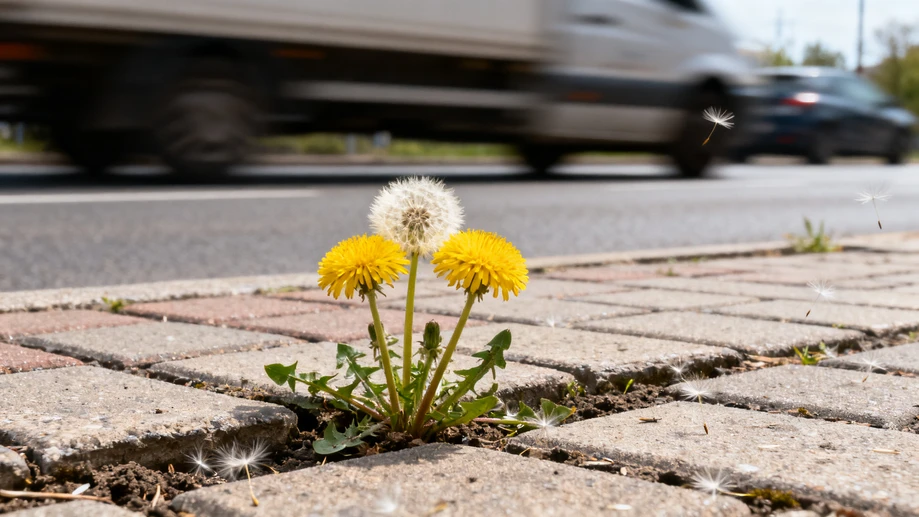
Did You Know Wild Dandelions Along Urban Sidewalks Have Their Own Secret City Adaptation Rules
Volunteer community naturalists across the Pacific Northwest have documented tiny, unexpected evolutionary changes in the common yellow weed that almost every city dweller overlooks on their daily walks.
Over the past three months, more than 180 volunteer participants in the regional Urban Wild Flora Survey have logged over 1,400 separate data sets tracking dandelion populations across 72 different residential blocks, busy roadside stretches and urban park edges stretching from southern British Columbia down to northern Oregon. The initial goal of the project was to map out how common wild pollinator food sources shift with new residential construction and lawn maintenance routines, but the team quickly noticed a stark, unrecorded difference between dandelions growing less than one meter from paved sidewalks and their counterparts living more than 200 meters away from any paved surface in suburban meadows. The roadside populations did not produce the classic, fluffy ultra-light seed heads most people are familiar with, and their seeds were nearly 30 percent heavier with a thicker, waxy outer coating that was far less likely to break apart in a light breeze.
Lead project coordinator and amateur botanist Mara Carter explained that this unique trait makes perfect sense once you stop to think about how urban wind patterns work. In open meadows, dandelions rely on loose fluffy seeds to catch high altitude gusts and travel kilometers away to find newly cleared, nutrient rich open soil patches to colonize. But in dense urban neighborhoods, tall buildings break up consistent wind flows, and 80 percent of any seed that floats more than three meters away from the parent plant will land directly on impermeable asphalt, get crushed by passing vehicle tires, wash down into storm drains, or get swept away by street cleaning crews. The heavier seeds that drop directly into the tiny cracks around the parent plant end up in spots that have already proven capable of supporting dandelion growth, and the volunteer team’s follow up counts found these seeds had a 72 percent higher survival rate than wind dispersed seeds from the same species.
The team also documented another surprisingly clever adjustment in the roadside dandelion populations that no prior formal observational work had noted. Dandelions growing right next to high foot traffic sidewalks open their bright yellow blooms roughly 45 minutes earlier in the morning than their meadow dwelling relatives, completing the majority of their pollination process before rush hour brings dense exhaust fumes that stick to pollen grains and block local small bee movement. Populations growing right next to busy bus stops even keep their blooms open nearly an hour later after sunset, to catch the small window of milder, cleaner air that arrives once most commuters have headed home for the day, giving late foraging wild bees that thrive on warm evening conditions extra time to pick up their nectar.
These observations completely upend the widespread public idea that dandelions are a generic, unevolving “super invader” that can grow anywhere without making any targeted adjustments to their environment. Researchers who have studied urban flora for decades noted that these tiny population level differences likely built up slowly over the past 60 years, as more and more of the region’s natural meadow land was converted to residential neighborhoods and paved roads. Dandelions growing in manicured public park lawns still hold onto the classic fluffy light seed trait, to spread quickly across freshly mowed grass where regular lawn trimmers leave empty open spots for new plants to root, while populations growing right next to construction site walls have grown far shorter, sturdier stems that almost never get crushed by passing construction carts and foot traffic.
For most city dwellers, dandelions are nothing more than a common nuisance they kick out of the way while walking their dogs, or yank out of their lawns without a second thought. These new observations remind people that the small, unassuming patches of wild greenery peeking out of sidewalk cracks are not static, unchanging weeds. They are living, adapting populations that have quietly learned to adjust their entire growth cycle, seed development and flowering routines to match the rhythm of the human cities they live in. The next time you are walking down a familiar sidewalk, take one extra second to glance at the small yellow flowers peeking out of the crack next to your feet, and you might be looking at a small, one of a kind natural miracle that evolved right on the street you have been walking down for years.