
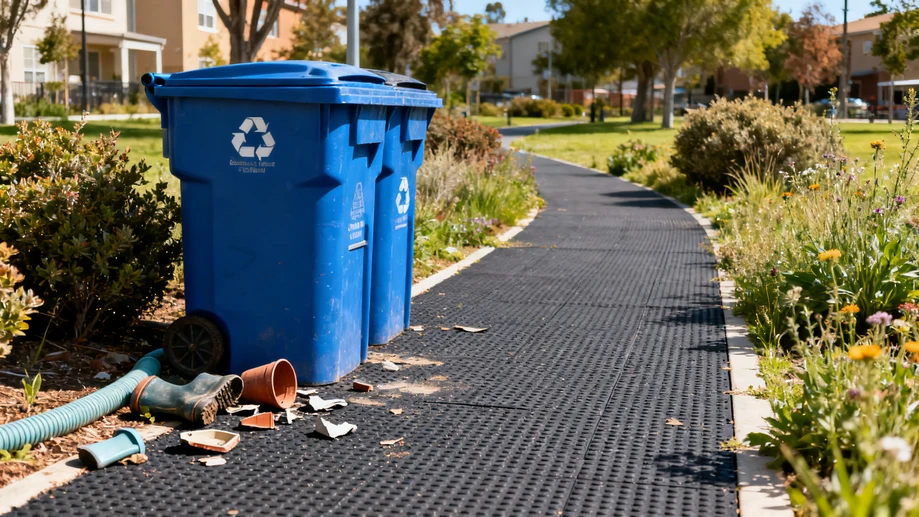
Did Your Old Worn-out Garden Hose End Up As A Local Park’s New Playground Path?
A neighborhood environmental initiative in Portland, Oregon turns overlooked hard-to-recycle household yard waste into soft, safe public paths that cut landfill waste by tons every year.
Last week, dozens of local residents wandering through the newly renovated Woodland Park in northeast Portland noticed something unusual under their feet. The 400-meter main walking path in the park did not feel hard and rigid like regular asphalt, but had a gentle, shock-absorbent give that caught many people by surprise. Kids running along the path tripped and fell without scraping their knees, elderly walkers with joint pain said the surface felt far kinder to their ankles on long strolls, and regular park visitors immediately started asking park staff where the new paving material had been sourced.
The answer stunned almost everyone who asked: every single piece of the new path is made entirely from discarded yard waste that most local trash services refuse to recycle. Old cracked garden hoses, torn waterproof rain boots, chipped plastic planters, broken lawn edging strips and worn-out outdoor furniture parts that would normally sit in a landfill for 400 years or more were all collected, cleaned, shredded and pressed into interlocking paving slabs, no brand new raw plastic or rubber added at any point in the process. Local non-profit group Green Footprint Collective launched the project two years ago, after they found that nearly 120 tons of this specific category of mixed material yard waste ends up in Portland landfills every single year.
After 18 months of testing low-temperature processing techniques that do not release harmful fumes during production, the organization partnered with a small local building materials factory to roll out the first test sections of the path back in March this year. Public feedback was far more positive than the team ever anticipated: more than 700 local residents submitted positive comments in the first month of the test run, noting that the new path drains far faster than asphalt to eliminate slippery puddles after rain, and stays 12 degrees Celsius cooler than traditional paving under direct summer midday sun, making it safe for bare feet even on the hottest days. The Portland municipal parks department has now officially approved rolling out this recycled paving material to all 27 neighborhood parks across the city over the next 12 months, with plans to install matching soft surfacing at local off-leash dog parks to prevent paw injuries from sharp or hot ground.
Local drop-off points for these hard-to-recycle yard items have seen a 700 percent jump in donations over the past three weeks, as residents rush to drop off old items they previously planned to throw straight into general trash bins. Multiple local elementary schools have organized field trips to the processing facility to show students how their old household items get transformed into parts of their local parks, and dozens of neighborhood parent groups have started hosting monthly collection drives to gather discarded yard items from blocks across the city. Organizers say the project has already cut local landfill waste by more than 17 tons in the first six months of operation, and they are already getting inquiry emails from environmental groups in 11 other US cities that want to copy the model for their own public green spaces.