
Did Earth's Secret Architects Crawl Under Your Bed Last Night?
Unearthing the astonishing superpowers of creatures you've squished without a second thought
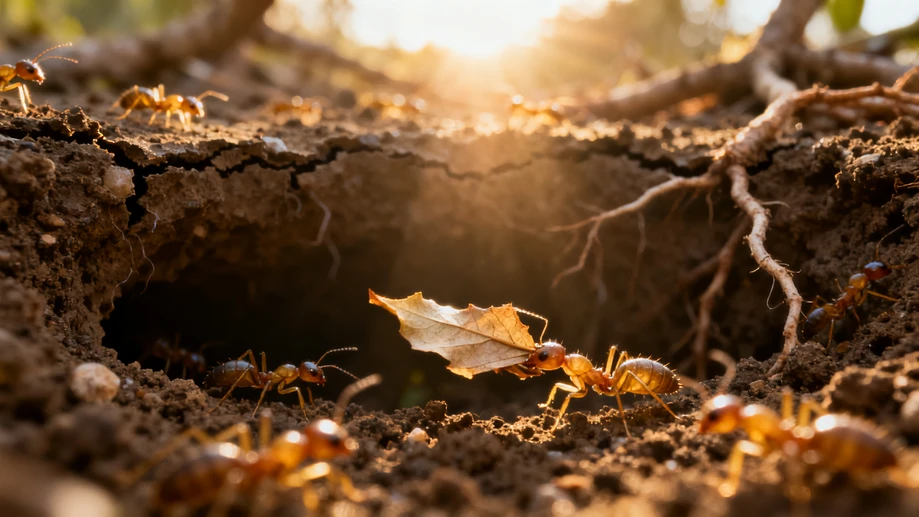
While you sip your morning coffee, armies of tiny engineers are remodeling the planet beneath your feet. Arthropods – those often-dismissed insects, spiders, and crustaceans – constitute over 80% of all known animal species. Yet their most astonishing feats remain hidden in plain sight. Consider the humble termite: colonies build towering mounds taller than giraffes with natural air conditioning so efficient it inspires human architects. Meanwhile, the minuscule springtail performs acrobatic escapes using a spring-loaded fork beneath its abdomen, launching itself 100 times its body length in milliseconds. These creatures aren't merely surviving; they're executing biological marvels that baffle scientists while performing ecological services worth trillions.
Dragonflies conduct aerial maneuvers that make fighter jets look clumsy, with mid-air pivots at 9G forces that would render humans unconscious. Their compound eyes process 200 images per second compared to our sluggish 60, detecting prey through a mosaic vision we can scarcely imagine. Beneath forest floors, mycorrhizal fungi weave networks dubbed the 'Wood Wide Web', connecting trees in nutrient-sharing networks. When an aphid attacks a Douglas fir, chemical warnings travel fungal highways to neighboring pines – a botanical internet predating humans by millions of years. These organisms execute complex algorithms without brains, solving problems through swarm intelligence that helps farmers combat pests naturally.
Shimmering in tropical rainforests, morpho butterflies manipulate light at nanoscale levels. Their wings contain microscopic ridges refracting light to create iridescent blues without pigments, a structural coloration now revolutionizing anti-counterfeiting technology. Equally remarkable is the diabolical ironclad beetle, whose exoskeleton withstands 39,000 times its body weight – equivalent to a human surviving a 25-ton crush. Automakers study its crush-resistant design for lightweight vehicles. Even dust mites in your pillow contribute to the planet's nitrogen cycle, their microscopic corpses fertilizing soil as they decompose. These functionalities emerge from millions of years of evolutionary R&D.
Observing arthropod behaviors reveals extraordinary adaptations. Namibian fog-basking beetles perform handstands at dawn, collecting life-giving water from ocean mists on their bumpy backs. Fire ants self-assemble into living rafts during floods, creating buoyant structures that repair themselves instantly. Scientists recently discovered the glowing Jamaican click beetle calibrates its bioluminescence to match moonlight intensity, creating near-invisible communication. 'Bioinspired robotics mimics these traits,' explains Dr. Helena Reinhardt, entomologist at the Global Biodiversity Institute. 'We're developing swarm drones based on bee navigation and shock-absorbing materials modeled after insect joints.'
Perhaps most crucial is arthropods' role as Earth's cleanup crew. Dung beetles bury 1.4 billion tons of animal waste annually, preventing disease outbreaks while enriching soil. Carrion beetles consume dead animals faster than decomposition alone, recycling nutrients otherwise trapped in corpses. Without these tiny custodians, continents would drown in biological waste within months. Yet their populations are declining at alarming rates due to pesticides and habitat loss. 'Losing arthropods means losing ecosystems,' warns conservation biologist Dr. Kenji Tanaka. 'They're the rivets holding our planetary aircraft together.'
Next time you swat a fly or shriek at a spider, remember: you're encountering evolutionary masterpieces with capabilities beyond human engineering. These creatures pollinate three-quarters of our crops, maintain healthy soils, and inspire technologies from surgical adhesives to earthquake-resistant architecture. Their microscopic world holds solutions to climate change, pandemic prevention, and sustainable design. By protecting these tiny architects, we ultimately safeguard our own future on this shared planet where even the lowliest creature plays a starring role.