
Did You Know Your Morning Commute Snack Could Power Your Home Later?
This light-hearted deep dive demystifies everyday new energy applications that hide in plain sight in your daily routines.
Start your day the same way 90% of urban residents do: grab a packaged oat milk latte on your way out, finish half of a granola bar during the 10-minute walk to the bus stop, take an electric bus to work, and stop at a salad shop for lunch to pick up a pre-packaged avocado bowl. Most people never connect these totally mundane daily choices to new energy systems, and that is not a mistake made by casual observers. For decades, public media has framed new energy as distant, massive infrastructure: endless rows of wind turbines stretching across desert plateaus, sprawling solar farms covering thousands of acres of unused farmland, or offshore wind platforms standing dozens of miles off the coast. What no one talks about is how small, unnoticeable new energy use cases have already woven themselves into every corner of your regular routine, without you spending an extra cent or adjusting any of your habits.
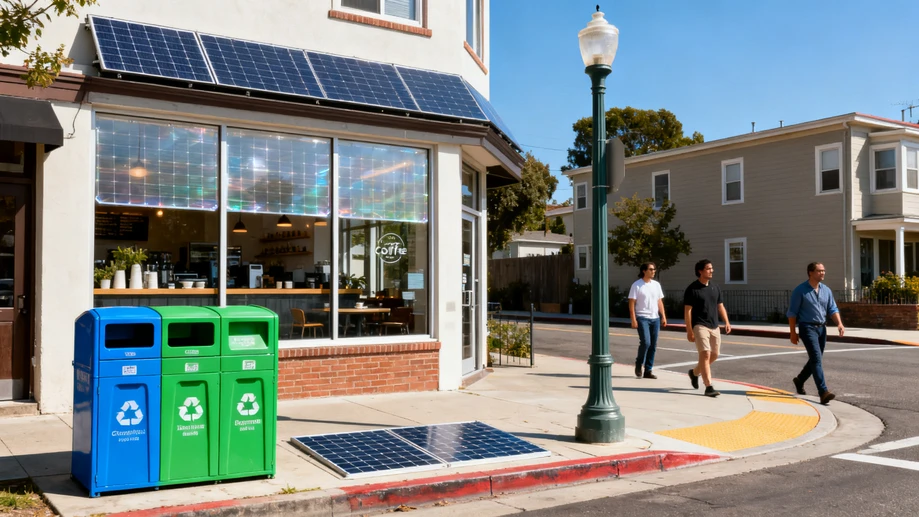
Take the leftover waste from that morning snack, for example. The banana peel you tossed in the green bin before leaving home, the leftover coffee grounds you dumped in the food waste bucket at the office pantry, and the half-eaten crust from your lunch sandwich all head to a local distributed biogas processing station less than 15 miles away from most downtown neighborhoods, instead of a faraway landfill. At these stations, food waste is sealed in constant-temperature fermentation tanks for 30 to 45 days, where natural microbes break down organic matter to release high-purity biogas that can be used directly for household cooking or burned to generate grid electricity. A standard three-person household produces around 2.5 kilograms of food waste per week, and that volume of waste can generate enough electricity to fully charge a shared e-bike twice, or run a standard home water heater for nearly two full hours.
You may also have stood on a new energy generating surface dozens of times without noticing it. More and more city sidewalks, bus stop speed bumps, and even university campus running tracks are paved with low-cost piezoelectric composite materials that turn the pressure from footsteps, rolling car tires, and running footsteps directly into usable electricity. Unlike large-scale solar panels that only work under direct sunlight, these piezoelectric pavements work at any time of day or night, rain or shine, and every 100 square meters of such pavement can generate around 1.2 kWh of electricity per day from regular foot and vehicle traffic. That amount of power is more than enough to run all the street lights along that stretch of road for 12 full hours after dark, and keep the nearby public shared power bank kiosks fully charged all week, no external power connection required.
Another underrated new energy application that hides in plain sight is the thin, transparent photovoltaic film that more small local businesses are sticking to their storefront windows these days. These flexible films do not look any different from normal window tinting when stuck to glass panes, they block harsh midday sun to lower indoor air conditioning consumption, and they quietly turn sunlight that hits the storefront directly into usable electricity. Most independent coffee shops and small neighborhood bookstores stick these films to 70% of their front window space, and the electricity generated on an average sunny day is enough to run all the in-store POS systems, the outdoor mobile phone charging stations by the door, and the small display fridge for cold drinks for 6 full hours, no extra power drawn from the city grid.
None of these use cases require fancy, unproven technology, or massive government funding to operate, and none of them demand that regular people change their entire lifestyle to participate. New energy is no longer a futuristic concept reserved for large industrial projects, it is a quiet, unassuming system that works in the background of your daily life, turning small, trivial pieces of everyday activity into clean, usable power. The next time you sort your banana peel into the food waste bin, or step on the smooth, dark pavement at your local bus stop, you can smile knowing that you are already a small, unrecognized part of the global new energy transition, no special equipment or extra effort required.