
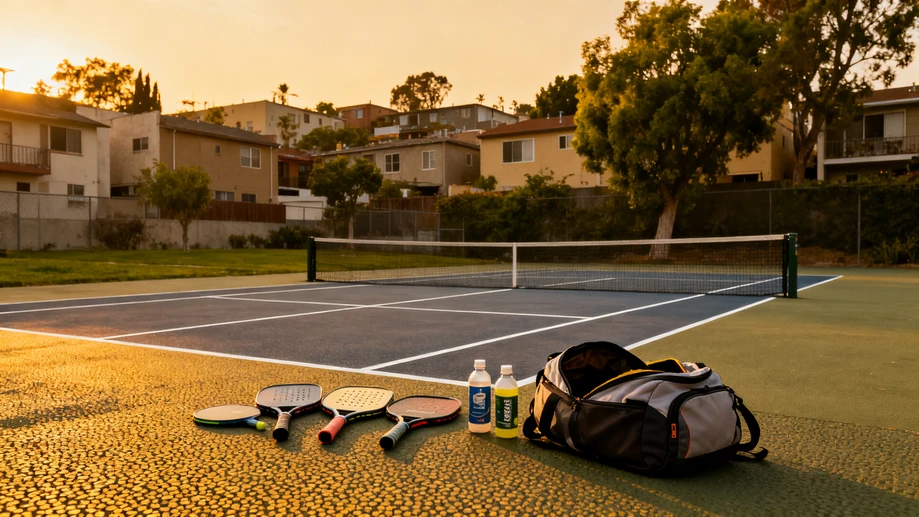
Have you noticed pickleball just quietly became the fastest growing sport across the entire globe
From local community courts to international exhibition matches, the once niche backyard pastime is reshaping how casual athletes and sports lovers spend their weekend leisure time this year.
The latest 2024 global sports industry report released by the International Health, Racquet and Sportsclub Association confirms that pickleball has seen a 22 percent year-over-year rise in active participants across 37 tracked countries, outpacing the 3 percent growth rate of tennis and the 2 percent growth rate of running for casual participants. What many people once thought was a temporary North American trend for middle aged suburban residents has spread far beyond original borders, with local governments in Germany, Spain, South Korea and Singapore rolling out public funding to convert underused tennis courts and empty pavement spaces into dedicated pickleball courts in the past six months alone. A full pickleball court only takes up one quarter of the space of a standard tennis court, and most new players can master basic serving and scoring rules in less than 30 minutes, which makes it accessible for 70 year old retirees and 12 year old primary school students to join the same game without facing obvious gaps in physical strength. More than 60 percent of surveyed companies in North America now pick pickleball sessions as their preferred team building activity, replacing the previously popular hiking and escape room arrangements, as the low intensity low contact nature of the sport reduces the risk of unexpected injuries, and the small team format ensures no one gets left out of group interactions during the activity.
A new cross-sector partnership announced earlier this month between the Association of Pickleball Professionals and the Association of Tennis Professionals has drawn widespread attention from sports fans across different fields. The two sides will jointly host the first cross-sport exhibition match on the outer courts of next year’s Miami Open, inviting retired top-tier tennis doubles players and top ranked professional pickleball players to team up for friendly competitions with mixed rules that combine features of both sports. Statistics from recent community match events show that 41 percent of regular pickleball players had never maintained a consistent weekly sports habit before they tried the sport, with most of them previously spending most of their after work time scrolling through short form videos at home. Many of these new participants report that joining regular weekend pickleball groups helped them expand their social circle by at least three times, and a large number of single residents in urban areas said they felt far less isolated after they got to know other local residents through fixed weekly game arrangements.
Long held stereotypes that pickleball is a sport reserved exclusively for older groups are being broken rapidly in 2024, as participation rates among Gen Z users under 25 have jumped by 37 percent over the past 12 months. College students across the United States and Europe have started using low cost fluorescent tape to mark temporary pickleball boundaries on underused corners of campus basketball courts, organizing late night weekend game sessions where players bring portable speakers and share snacks between rounds. Many well-known sports apparel brands that previously only produced gear for basketball, running and tennis have launched dedicated pickleball product lines this year, with specially designed thinner shoe soles that support the frequent short range direction changes that are common during pickleball games, and lightweight carbon fiber rackets adjusted for more precise control for new players. Even mainstream sports drink brands have rolled out smaller capacity electrolyte water bottles targeted at pickleball players, as the standard length of a casual pickleball match falls around 90 minutes, making the large one liter water bottles designed for long distance running unnecessarily bulky for most players.
A small coastal town in southern England recently made local headlines after it converted all of its underused outdoor public table tennis tables into compact mini pickleball courts, drawing huge crowds of tourists through the warmer summer months. The local tourism department reported that the number of tourists who traveled to the town specifically to join pickleball holiday events was 20,000 higher than the same period last year, driving an 18 percent rise in revenue for local family run homestays and small seaside restaurants. Contrary to the early concerns that the rising popularity of pickleball would squeeze the participant base of other traditional racket sports, long term tracking data shows that 62 percent of new pickleball players have expressed interest in trying tennis or badminton after they gained basic familiarity with racket sport movements through pickleball sessions. The sport effectively acts as a low pressure entry point for people who never thought they would be good at ball games, removing the fear of embarrassment that often stops new learners from showing up to more structured tennis or badminton beginner classes.
The first ever official Pickleball World Cup has been confirmed to take place in Dallas in 2025, with 32 national teams already submitting registration forms for both professional and amateur divisions. Unlike traditional large scale international sports events that set extremely strict qualification requirements for participants, the organizing committee of this World Cup has reserved 40 percent of all competition spots for ordinary amateur players, who do not need any past professional match awards or official ranking records to sign up. Any regular player who wins the local community qualifying event in their region can earn a spot to compete on the official global stage, and this fully inclusive rule is widely seen as the core reason behind the sport’s explosive global spread. Pickleball does not draw a clear rigid line between professional athletes and casual hobbyists, and every participant can get a fair chance to have fun and enjoy the pleasure of physical movement, no matter their age, skill level or past sports experience.