
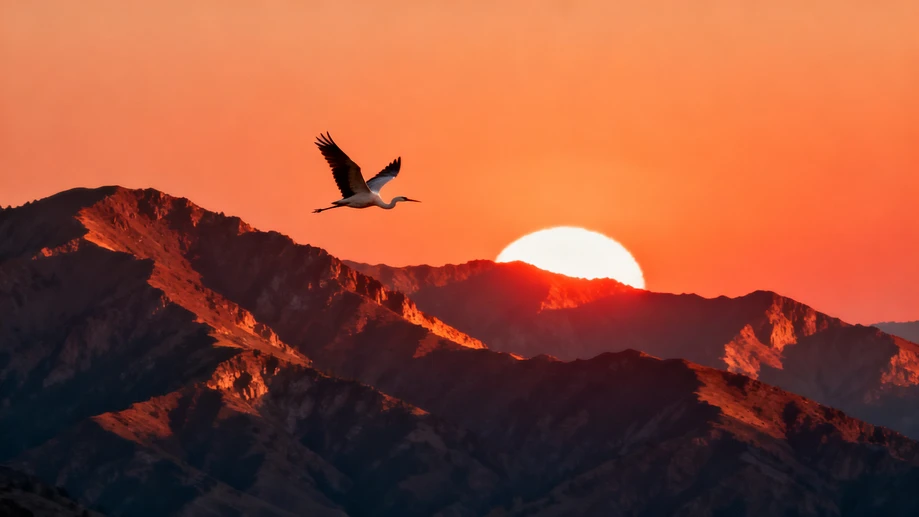
Why Do Birds Migrate Thousands of Miles Every Year?
The Astonishing Secrets Behind Their Epic Journeys Across the Globe
Every autumn, billions of birds take to the skies, embarking on journeys that stretch across continents and oceans—some covering distances equivalent to flying from New York to Sydney and back. This annual spectacle, a natural marvel unfolding right outside our windows, isn't just about survival; it's a testament to the intricate dance of evolution and instinct. From tiny hummingbirds fluttering over mountain ranges to majestic geese forming V-formations high above cities, migration is a global phenomenon that connects ecosystems and cultures. Scientists have long been fascinated by how these feathered travelers navigate such vast terrains without GPS, relying instead on ancient cues that remain largely mysterious. This journey, repeated for millennia, offers a window into nature's resilience and the delicate balance of our planet, making it a captivating topic for anyone curious about the world's daily wonders. As we delve deeper, we uncover stories of endurance that rival the most thrilling human adventures, proving that the skies are alive with secrets waiting to be explored.
So, what drives birds to undertake these perilous migrations? At its core, it's a simple quest for resources: food and breeding grounds. As seasons change, habitats transform—winter brings harsh conditions that freeze water sources and deplete insect populations, while summer offers abundant nourishment in warmer regions. Birds like the Arctic tern, which travels up to 25,000 miles annually, follow this pattern to exploit the lush Arctic summers for nesting and the Antarctic's bounty for feeding. But it's not just hunger; genetics play a starring role. Over generations, birds have evolved internal clocks synchronized with Earth's tilt, triggering hormonal changes that signal when to move. For instance, the bar-tailed godwit flies nonstop for over 7,000 miles from Alaska to New Zealand, fueled by fat reserves built during feasting periods. Scientists discovered that disruptions, such as light pollution in urban areas, can confuse these rhythms, leading to tragic delays. This biological imperative ensures species survival, but it’s a gamble: predators, storms, and human barriers like skyscrapers claim millions of lives each year, highlighting migration as a high-stakes game of life and death.
How do birds navigate such complex routes with pinpoint accuracy? It's a masterclass in sensory ingenuity, blending ancient instincts with real-time environmental cues. Research reveals that birds use the sun and stars as celestial maps—during the day, they calibrate direction based on the sun's position, while at night, constellations guide them across dark skies. Equally impressive is their sensitivity to Earth's magnetic field: tiny iron-based particles in their beaks act like internal compasses, detecting subtle shifts in geomagnetism to maintain course. Trials with homing pigeons show they can recalibrate after displacement, relying on landmarks like rivers or mountain ridges for fine-tuning. Social behaviors add another layer; flock formations reduce wind resistance through aerodynamic teamwork, conserving energy for long hauls. In cities, artificial lights often disorient migrants, causing collisions—a problem conservationists combat with "Lights Out" campaigns. These navigational feats aren't just random; they're honed through practice, with young birds learning routes from elders during group flights, turning migration into a generational saga of learning and adaptation.
Bird migration isn't confined to remote wilderness; it's a global event that touches every continent, from bustling metropolises to serene coastlines. In North America, the annual spring return of swallows to California's Mission San Juan Capistrano draws crowds celebrating this natural ritual, while Europe's stork migrations across the Mediterranean inspire folklore in villages. Asia witnesses the awe-inspiring flight of cranes over the Himalayas, where thin air demands extraordinary stamina, and Africa's savannas host flocks that fuel eco-tourism, boosting local economies. But climate change is rewriting this map: rising temperatures alter seasonal patterns, forcing birds to migrate earlier or shift routes—a study showed European robins now arrive weeks in advance, disrupting ecosystems. Human interventions, such as bird-friendly buildings with patterned glass, are mitigating risks, while citizen science projects like eBird empower ordinary people to track migrations via apps, turning observers into global data collectors. This interconnectedness underscores migration's role in pollination and pest control, making it vital for agriculture and biodiversity, yet vulnerable to environmental shifts we often overlook in daily life.
Witnessing migration firsthand can be as simple as stepping into your backyard or visiting a nearby park. Equip yourself with binoculars and a field guide during peak seasons—spring and fall—to spot species like warblers or ducks in action. Apps like Merlin Bird ID help identify calls and patterns, turning amateurs into experts. For a deeper dive, join local birdwatching groups; they often organize events at key stopover sites, such as wetlands, where birds rest and refuel. Contribute to conservation by reducing light pollution at home or planting native vegetation to provide food and shelter. Remarkably, birds adapt to urban life: pigeons in cities navigate using landmarks, while garden feeders support weary travelers. Engaging children in bird counts fosters environmental awareness, linking this ancient phenomenon to modern education. Ultimately, migration reminds us of nature's rhythms; by protecting habitats, we ensure future generations can marvel at sights like the synchronized flight of starlings, known as murmurations, which paint the sky with living art.
In an era of fast-paced technology, bird migration stands as a humbling reminder of nature's sophistication and our shared responsibility. It symbolizes the delicate web of life, where shifts in one region ripple globally—melting ice caps shrink Arctic breeding grounds, while pollution in oceans threatens food chains. By appreciating this journey, we gain insights into resilience and adaptation that inspire innovation, from biomimicry in drone design to lessons in sustainable living. As migration patterns evolve with climate shifts, they offer real-time data for scientists, urging us to act. So next time you see a V-shaped flock overhead, remember: you're witnessing one of Earth's greatest stories, a silent epic that connects us all. Embrace it, protect it, and let it fuel your curiosity about the natural world unfolding every day.