
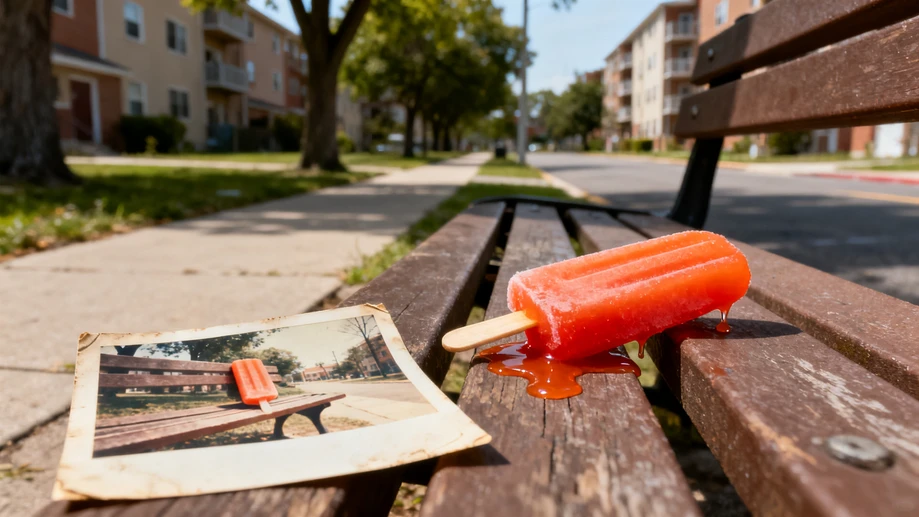
Did you notice your usual summer popsicle melts twice as fast as it did when you were a kid
Tiny overlooked daily details you never paid extra attention to are the most intuitive evidence of slow climate change happening right around you
Last weekend when you stopped by the convenience store at the entrance of the community to buy a orange-flavored popsicle on a 32-degree July afternoon, you could barely finish opening the plastic wrapper and pull out your phone to take a quick photo, before sticky sweet syrup started dripping down your wrist and soaking the cuff of your short sleeve. You might have blamed it on your slow reaction, or that the popsicle shop stored the popsicles at a slightly higher temperature than usual, but if you dig into your old childhood memories, you will quickly find that 15 or 20 years ago, the same popsicle at the exact same 32-degree temperature could keep its shape for no less than 10 minutes, enough for you to walk three blocks home, share half of it with your little friend, and still have a whole intact part left to eat while sitting on the balcony. This tiny difference is not a trick played by your fading childhood memory, it is a real, measurable result of the 0.8 degree Celsius rise in average summer temperature recorded in most northern mid-latitude regions over the past 20 years. You can find more of these silent signals all over your neighborhood: the 30-year-old osmanthus tree planted at the gate of the community used to bloom precisely seven days before every Mid-Autumn Festival, spreading sweet scent all over every unit building, but now it never bursts into full bloom until at least 15 days after the National Day holiday ends. The stray cats that used to curl up and nap under the thick shade of the banyan tree on summer afternoons now all crowd around the cold air vent at the back of the outdoor vending machine, because even the shade can no longer bring down the surface temperature of the asphalt road to a comfortable level for them to rest.
You have probably had this similar feeling in winter too: when you turn on the central heating at home in recent years, you end up wearing thin cotton hoodies to walk around the house, even on the coldest days of the year, while 20 years ago you needed to wrap yourself in thick wool sweaters and put a plush blanket on your lap to stay warm during the same month. The total amount of natural gas you use for heating every winter has dropped by nearly 20 percent compared to the usage record you kept in 2012, but you never realized that change has a lot to do with the continuously rising average winter temperature, instead of you being more resistant to cold than before. Local ski resort owners also feel this change more intuitively than ordinary residents: 10 years ago, they could count on natural snowfall to cover the whole slope from late November to early March the next year, but now they have to buy three times more artificial snow making machines than they used to, and they often delay the opening date of the ski park by more than three weeks every winter, because the temperature rises randomly even in mid January, and all the thin natural snow on the slope melts completely over two warm days, forcing them to spend extra money to reproduce snow nonstop for 72 hours to keep the business running.
These climate shifts are also quietly changing the food you put on your dinner table every day, most of the time without you even noticing the difference. The crispy juicy peaches grown on local suburban farms used to hit the market exactly after the Dragon Boat Festival every year, with thick fuzzy peel and sweet juice that flows all over your hand when you take a single bite, but now these local peaches are placed on the shelf of your community vegetable market as early as mid May, almost two full weeks earlier than they used to ripen. The wild crayfish that used to be caught in large amounts in the nearby natural streams every spring have also dropped in total output by nearly 30 percent in the past five years, because the spring water temperature is 2 degrees higher than the historical average level, which disrupts the normal spawning cycle of wild crayfish and makes it impossible for them to reproduce in the same amount as they did decades ago. The barbecue stall owner at the end of your street told you last summer that he has to order 40 percent more crayfish from southern provinces every year now, just to meet the demand of local customers who line up for crayfish hot pot every weekend night, since the local catch can no longer support his daily sales volume. Even the small wild strawberries you used to pick on the rural hillside during spring outings have ripened two weeks earlier now, and many of them have already gone bad and dropped to the ground before you have time to plan a spring trip to the countryside.
The good news is that you do not need to take extreme, life-altering actions to slow down these small, noticeable shifts in your daily life, and you do not have to quit your job or spend all your savings buying expensive eco-friendly products to make a difference. Every small, trivial choice you make in your regular daily routine can add up to create a huge positive impact over time. For example, if you turn your air conditioning temperature 1 degree higher than you usually set it to during summer, you can cut down a noticeable amount of carbon emission that would otherwise be released into the atmosphere to power the extra cooling system. If you choose to take public transit or ride a bike for short trips that are less than two kilometers away instead of driving your car, you are helping reduce the total carbon footprint of the city you live in, little by little. Even small actions like unplugging your phone charger from the power socket when it is not in use, or taking a 2-minute shorter shower every day, are contributing to less energy consumption and fewer greenhouse gas emissions that are driving the unusual temperature rise. None of these actions require you to make huge sacrifices, and none of them will make your life less comfortable than it already is, but they will accumulate to create a far more gentle, stable climate that we all grew up with.
The end goal of all these small efforts is not to save some faraway polar bear that you will never meet in person, it is to make sure that 10 years from now, the kids growing up in your neighborhood can still hold a regular orange popsicle in their hand and walk all the way home without having it melt all over their wrists before they take the first bite. It is to make sure the old osmanthus tree at the community gate can still burst into full bloom right before Mid-Autumn Festival, spreading its familiar sweet scent through every open window on the festival night. It is to make sure that the first winter snow can still fall as scheduled in late November, covering every rooftop and every tree branch with soft white snow for kids to run around and build snowmen on the street. These small, warm details that we took for granted for decades do not have to disappear, and every tiny choice you make today will help keep those little happy parts of ordinary life stay for many more generations to come.