
Did You Know Your Breakfast Could Be Slightly Radioactive?
The Surprising Science Lurking in Your Fruit Bowl and Beyond
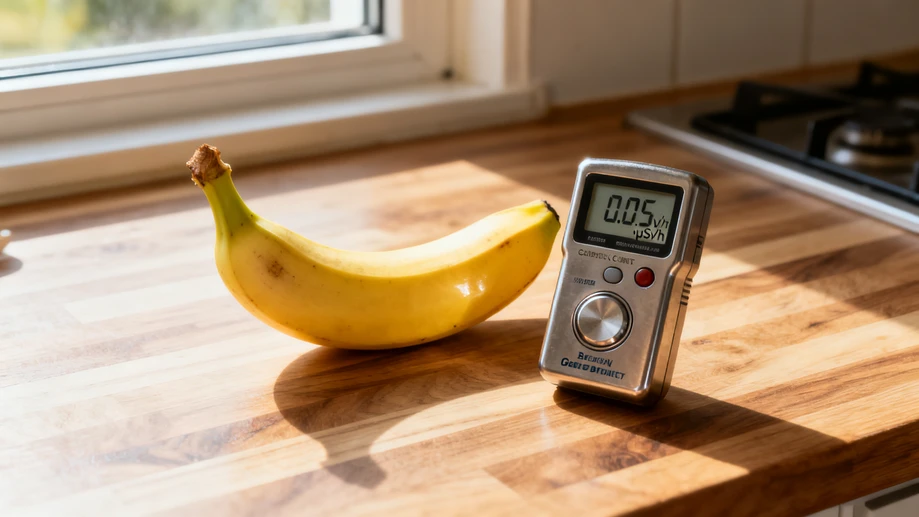
Imagine starting your day with a healthy, potassium-rich banana. It’s a common, nutritious choice. But here’s a twist: that very banana emits a tiny, harmless whisper of radiation. Yes, you read that right. Bananas contain a naturally occurring radioactive isotope called potassium-40 (K-40). While the word "radioactive" might conjure images of glowing green sludge or nuclear disasters, the reality is far more mundane and fascinating. This phenomenon is part of a broader, often overlooked truth: our world, and even our bodies, are naturally bathed in incredibly low levels of radiation all the time. It’s a fundamental aspect of Earth’s natural environment, stemming from the rocks beneath our feet to the cosmic rays raining down from space. This background radiation is the universe’s quiet hum, a constant presence we rarely notice.
Bananas are just one quirky example. The potassium essential for our nerve and muscle function includes a small fraction of K-40. As this isotope decays, it releases beta particles and gamma rays. The amount is minuscule – eating a banana gives you a radiation dose of about 0.1 microsieverts (μSv). Scientists even use the "Banana Equivalent Dose" (BED) as an informal unit to compare very low levels of radiation exposure. For perspective, you’d need to eat roughly 10 million bananas at once to receive a potentially lethal dose – an impossible feat! The radiation from a banana is dwarfed by the dose you get from simply living on Earth for a day (around 10 μSv) or taking a cross-country flight (about 40 μSv). Your own body contributes too, thanks to K-40 and carbon-14 within your tissues.
Look around your home, and you’ll find more surprising sources. That granite countertop admired for its durability and beauty? Granite often contains trace amounts of uranium, thorium, and their decay products like radon gas, all emitting low-level radiation. The beautiful glaze on your vintage ceramic dishes might contain uranium oxide, used historically to create vibrant orange and red colors (though modern dishware generally avoids this). Even the bricks in your walls and the concrete in your foundation contain tiny amounts of radioactive elements sourced from the Earth. The air itself carries radon, a colorless, odorless radioactive gas that seeps from the ground, especially in areas with certain bedrock. While high concentrations of radon indoors are a health concern requiring mitigation, the very low levels present almost everywhere are just part of our natural background.
So, why aren’t we glowing? The key is dose and duration. The radiation levels from these natural sources are extremely low. Our planet's atmosphere and magnetic field shield us from the brunt of cosmic radiation. Our bodies have evolved sophisticated cellular repair mechanisms to handle the minor damage caused by this constant, low-level background radiation. The real risks come from concentrated, high-dose exposures, like those experienced in certain industrial accidents or from medical radiation therapy (where the benefits are carefully weighed against the risks). The natural radioactivity in our food and environment is simply not intense enough to overwhelm our biological defenses. Regulatory agencies worldwide set strict limits for radiation exposure from artificial sources, like nuclear power plants or medical devices, ensuring they remain far below dangerous thresholds.
Understanding this hidden natural world demystifies radiation and fosters a more rational perspective. It highlights the incredible resilience of life, evolved amidst a universe inherently filled with energetic particles. It reminds us that "radioactive" isn't synonymous with "dangerous"; context and dose are everything. This knowledge empowers us to make informed decisions about actual risks (like testing our homes for radon) while calmly enjoying our slightly radioactive breakfast. The next time you peel a banana, appreciate not just its vitamins, but also the subtle, ancient nuclear processes within it – a tiny, edible piece of our planet’s dynamic geology and cosmic history, perfectly safe and utterly fascinating.