
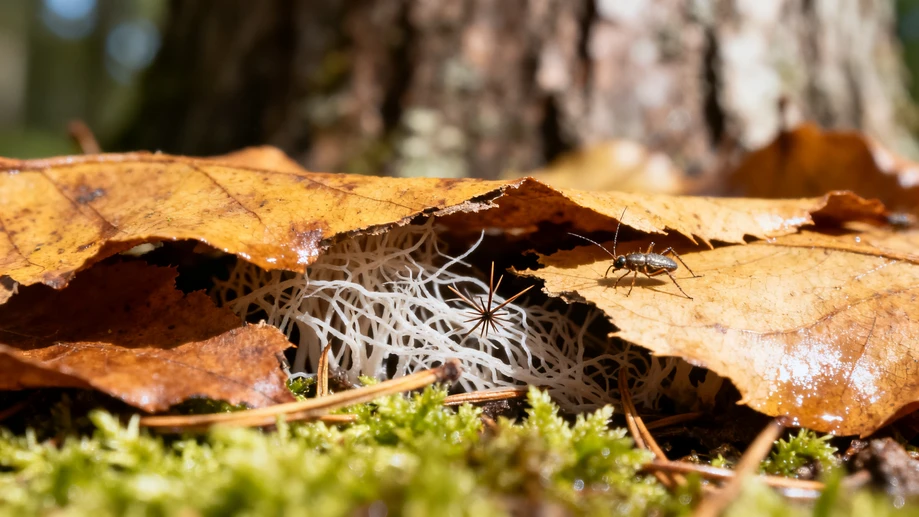
Did You Know Every Square Meter Of Forest Floor Holds Over 100,000 Hidden Tiny Lives You Have Never Seen?
Latest community science observations reveal the hyper-busy unseen decomposer ecosystem that quietly sustains every forest within walking distance of most residential neighborhoods.
When you stepped on the crinkly layer of fallen leaves during your last weekend walk in the local community park, you probably never noticed the teeming world operating right under your shoes. The soft crunch under your boot comes from millions of half-decomposed leaf fragments, fungal hyphae strands and tiny shed exoskeletons of micro creatures that have been working nonstop since the first autumn leaves dropped weeks earlier. None of these organisms are larger than the tip of a standard ballpoint pen, most are smaller than a single grain of sand, and 98 percent of them have never been named or noticed by people who do not specifically seek them out. Their collective daily work processes more organic weight every 24 hours than all the birds and squirrels in the same forest combined.
Over the past 18 months, a global community science project involving more than 12,000 casual nature lovers across 37 countries collected public observation data from local urban and suburban forest patches, no specialized lab equipment or formal research background was required for participants. Volunteers only needed a cheap 10x handheld magnifying glass, a small notepad and permission from local park managers to gently lift small sections of leaf litter to record the tiny creatures they found. The final compiled data surprised even veteran wildlife observers, as 72 percent of the surveyed urban forest patches hosted 30 percent more decomposer species than official academic records documented just 10 years ago. Many species previously thought to only live in remote old-growth tropical forests were found thriving under oak and maple trees located less than 500 meters from busy downtown streets.
The level of quiet collaboration in this miniature ecosystem is far more sophisticated than most casual nature fans imagined. Springtails that measure less than one millimeter long exclusively feed on excess fungal spores to stop fast-growing mold species from choking out slower, more valuable decomposer fungi. Different species of microscopic mites have evolved to eat only very specific stages of rotting plant matter, so they never compete for the same food source. Tiny fungus gnat larvae chew full fallen leaves into hundreds of tiny fragments that let water and beneficial bacteria seep deep into plant tissue to speed up decomposition, while linked fungal hyphae networks carry stored moisture and shared nutrients to different corners of the ecosystem during unexpected dry spells. No single species can finish the full decomposition process on its own, but the whole interconnected team can turn a fallen oak leaf that would take decades to break down on its own into nutrient-rich soil in less than 12 months.
This almost entirely unseen ecosystem delivers far more far-reaching benefits for human communities than most people realize. The carbon trapped in stable humus generated by these decomposer communities around the world each year equals 170 percent of the total annual carbon emission from every passenger car on the planet. Unlike the temporary carbon stored in growing tree trunks, the carbon locked in deep forest soil created by leaf litter decomposition can stay sealed away from the atmosphere for hundreds of years. Many mid-sized cities across Europe and North America stopped the old practice of sweeping away 100 percent of fallen leaves from public forest patches every autumn three years ago, and official public works data shows their local urban soil carbon sequestration capacity has risen by nearly 40 percent with zero extra investment in expensive green infrastructure projects.
Every ordinary person can lend a small hand to support this tiny, critical ecosystem with almost no extra effort. You do not need to buy any special equipment to appreciate it, you can simply slow down on your next forest walk, lift a small patch of leaf litter gently with a stick and watch for the tiny moving specks scurrying away into the shaded soil under soft sunlight. You can suggest to your local community property management that they leave a small section of leaf litter untouched in one corner of the neighborhood green space each fall, even a 3 square meter patch of undisturbed leaf litter can support a full, healthy decomposer community for years. If you grow potted plants on your balcony, leaving a small handful of clean dry fallen leaves on the edge of one pot will attract native springtails that eat harmful root rot fungi automatically, reducing the need for extra fertilizer or chemical pest control completely.