
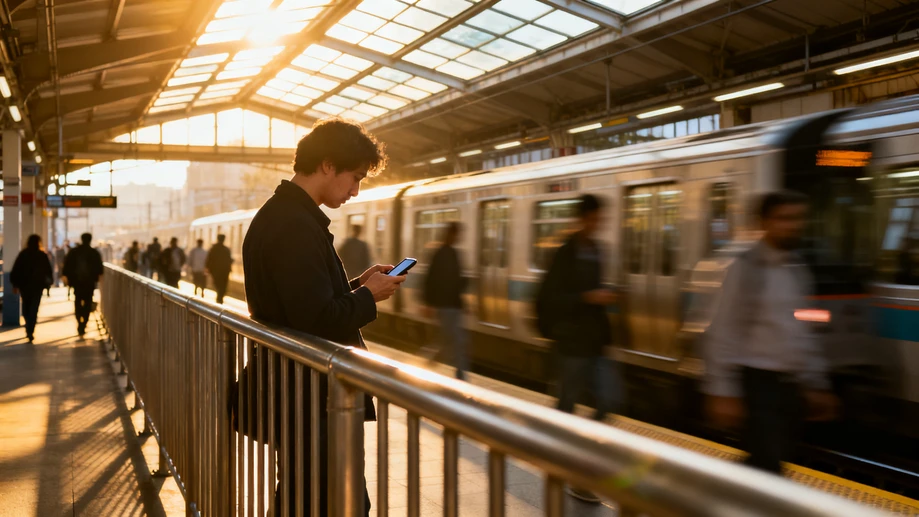
5 Invisible Ways Your Smartphone Reshapes Your Daily Reality
The subtle psychological and behavioral shifts you never noticed
Your smartphone isn't just a communication device; it's a silent architect reconstructing your mind's landscape. Neuroscientists reveal that constant notifications trigger micro-dopamine releases, training your brain to crave interruptions. This explains why checking emails during dinner feels instinctive. A University of Texas study found participants scored 20% lower on cognitive tests when their phones were visible nearby, even if unused. The mere presence of your device creates "brain drain" as mental energy reserves deplete from resisting the urge to glance at it. Your pocket companion has quietly become a cognitive load manager, prioritizing fragmented attention over deep focus.
Remember memorizing phone numbers? That skill vanished as devices outsourced memory. Columbia University research confirms "digital amnesia" – we forget information readily available online. GPS dependence atrophies spatial memory; London taxi drivers famously developed larger hippocampi through navigation practice, while modern navigation app users show reduced gray matter in that region. Your phone also reshapes social perception. MIT behavioral scientists observed that people instinctively angle screens away during conversations, signaling subconscious awareness of divided attention. This constant partial engagement rewires relationship dynamics, making uninterrupted presence a rare commodity.
Sleep patterns undergo stealthy transformations through nocturnal screen rituals. Harvard chronobiologists warn that blue light suppresses melatonin production by up to 23%, delaying sleep onset. The National Sleep Foundation reports 90% of Americans use devices within an hour of bedtime, correlating with widespread insomnia. Your circadian rhythm isn't the only casualty. "Phantom vibration syndrome" affects 70% of users, where imagined notifications trigger physical reactions. This neurological glitch reveals how deeply technology embeds itself in our sensory expectations, turning anticipation into physiological reflexes.
Decision-making processes evolve through algorithmic curation. Netflix's recommendation engine influences 80% of viewing choices, while Spotify's algorithms curate 60% of music streams. This passive consumption creates "filter bubbles" – personalized information ecosystems limiting exposure to diverse perspectives. Shopping habits transform too; augmented reality apps let you visualize furniture in your room before purchase, reducing return rates by 22%. These invisible nudges guide choices, making you wonder: are those brilliant ideas truly yours, or suggestions planted by predictive algorithms?
Physical interactions manifest surprising adaptations. Stanford researchers documented "text claw" – muscle strain from prolonged typing – and "tech neck" affecting 67% of young adults. More intriguingly, our posture communicates new social signals: tilting your screen downward signals privacy, while angling it upward invites collaboration. Even walking patterns change; pedestrians checking phones take 38% longer to cross streets and navigate with "digital gait" – slower, erratic steps. These micro-adjustments demonstrate how technology reshapes biological mechanics, turning unconscious gestures into modern body language.
This transformation isn't inherently negative. Smartphones enable unprecedented global connectivity and knowledge access. The key lies in mindful usage: establishing tech-free zones, scheduling notification downtime, and occasionally letting your brain navigate without GPS. As behavioral economist Dan Ariely notes, "Technology is neither good nor bad; it's the context that determines its impact." Recognize these invisible influences, and you reclaim agency over your digital evolution. Your pocket-sized revolution continues, but now you see the wiring behind the curtain.