
Can Mushrooms Really Communicate With Each Other Through Underground Networks?
Beneath every forest floor lies a hidden web of fungal threads that scientists are now calling the most complex communication network on Earth, and it has been operating for 400 million years without anyone noticing
The next time you take a walk through a forest, take a moment to consider what is happening beneath your boots. Underneath the layer of fallen leaves and decomposing twigs, there exists an invisible network so vast and intricate that it makes the internet look like a child's toy telephone. This network is made of fungal threads called mycelium, and it connects almost every tree, shrub, and plant in the forest in a system of biological communication that scientists have dubbed the Wood Wide Web. For decades, researchers assumed that the mushrooms you see popping up after a rainstorm were simply the reproductive organs of fungi whose only job was to break down dead organic matter. But over the past fifteen years, and with a burst of groundbreaking research published in 2026, scientists have discovered that these fungal networks are doing something far more remarkable than anyone ever imagined. They are allowing plants to share nutrients, send warning signals to each other about insect attacks, and even transfer carbon from older, stronger trees to younger, struggling seedlings that are growing in deep shade. The implications of this discovery are reshaping our entire understanding of how ecosystems function, and challenging the long-held assumption that plants are passive, solitary organisms competing blindly for resources.
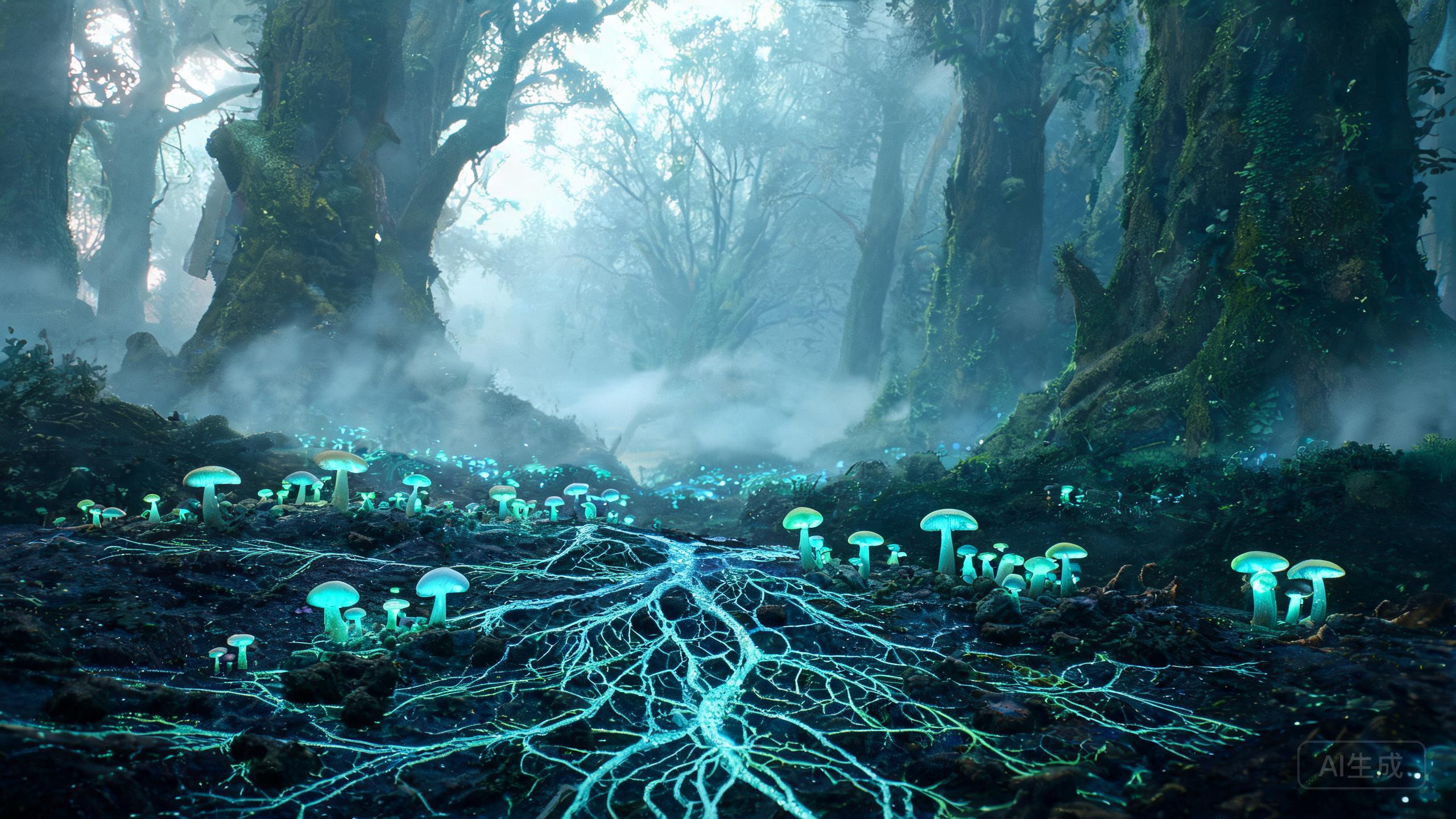
To understand how this underground internet works, you first need to understand what mycelium actually is. Fungi, unlike plants, do not have roots, leaves, or the ability to photosynthesize. Instead, they grow as a web of incredibly thin, thread-like structures called hyphae, which collectively form a network called mycelium. A single cubic centimeter of forest soil can contain up to 200 meters of these fungal threads, and a single mycelial network can extend across hundreds of hectares, making some individual fungal organisms among the largest living things on the planet. The mycelium grows through the soil, and when it encounters a plant root, it wraps around it or in some cases actually penetrates the root cell walls, forming a structure called a mycorrhiza. This is a symbiotic relationship where both organisms benefit. The plant, through photosynthesis, produces sugars and lipids that it shares with the fungus in exchange for water and minerals, particularly phosphorus and nitrogen, which the fungus is far more efficient at extracting from the soil than the plant's own roots. But here is where it gets extraordinary. A single fungus does not just connect to one plant. It connects to dozens, sometimes hundreds of plants simultaneously, acting as a biological switchboard that links every rooted organism in a given area into a shared network.
The first real evidence that this network was being used for something other than simple nutrient exchange came from a now-famous experiment conducted by a team of ecologists at the University of British Columbia in the early 2000s. The researchers grew Douglas fir seedlings in pairs, some connected through a mycorrhizal network and some isolated from it. They then introduced pine weevils, a destructive bark-boring insect, to one plant in each pair. Within hours, the connected neighbor plant began producing defensive chemicals in its own tissues, as if it had received a message that danger was near. The isolated plants showed no such response. The conclusion was startling. The attacked plant had sent a chemical warning signal through the fungal network, and the neighbor had received it and responded by ramping up its own chemical defenses before the insects even arrived. This was the first documented evidence of plant-to-plant communication mediated by a fungal network, and it opened the door to an entirely new field of research. Since then, scientists have documented similar warning signals in over 80 plant species across six continents, involving everything from tomato plants sending alerts about aphid infestations to old-growth trees warning their neighbors about approaching drought stress.
What has truly stunned researchers in 2026 is the discovery that these networks do not just transmit danger signals. They function as a full-fledged resource economy, and the way resources flow through them is far from random. A major study published earlier this year tracked the movement of carbon isotopes through a 50-hectare old-growth forest plot in Oregon, mapping every individual tree and the fungal connections between them. The researchers found that the largest, oldest trees in the forest, which they nicknamed hub trees or mother trees, were consistently pumping carbon through the fungal network to younger seedlings growing in the deep shade beneath their canopies. These seedlings, which received up to 40 percent of their carbon from the mother tree through the fungal network, were significantly more likely to survive than seedlings that were disconnected from the network. The mother trees were not just feeding their own offspring, either. The carbon flow was directed preferentially toward genetically related seedlings, suggesting that the trees can somehow recognize kin through the fungal network and allocate more resources to their own relatives. This finding alone overturns decades of ecological theory that treated forest trees as self-interested competitors locked in a battle for light, water, and nutrients. Instead, forests appear to function more like cooperative communities where resources are actively shared through a underground redistribution system that looks almost nothing like the competitive free-for-all that scientists had always assumed.
The communication happening through these networks is also far more nuanced than simple on-off warning signals. A series of experiments conducted in 2025 and 2026 by a research consortium in Europe revealed that the chemical signals traveling through mycorrhizal networks carry specific, detailed information. When a plant is attacked by aphids, the chemical signal it sends through the network is different from the one it sends when attacked by caterpillars, and the neighbor plants respond by producing different defensive compounds tailored to each specific threat. When a plant experiences drought stress, it sends a different signal again, prompting connected neighbors to close their stomata and reduce water loss before the drought reaches them. Some researchers have even found evidence that certain compounds traveling through the network may function like primitive neurotransmitters, with chemical structures that bear an eerie resemblance to serotonin and dopamine found in animal nervous systems. While no one is claiming that fungi or plants possess consciousness or anything resembling a brain, the chemical complexity of this communication is orders of magnitude beyond what anyone thought possible for organisms without nervous systems. The signals are not just saying danger, they are saying aphids are eating my leaves, prepare your alkaloid defenses, and the receiver plants are responding accordingly.
The practical implications of this research are enormous and are already beginning to reshape how we think about forestry, conservation, and agriculture. For decades, industrial logging operations have clear-cut forests on the assumption that removing all trees would simply clear the way for new growth. But we now know that clear-cutting destroys the mycorrhizal network along with the mother trees that sustain it, leaving the next generation of seedlings to fend for themselves without the nutrient subsidies that normally carry them through their vulnerable early years. Studies comparing clear-cut sites to selectively logged sites have shown that forests where mother trees were preserved regrow 60 percent faster and with significantly greater species diversity. Some forestry companies in Scandinavia and Canada have already begun adopting selective harvesting practices based on this research, identifying and protecting hub trees to preserve the underground network. In agriculture, researchers are exploring whether inoculating crop fields with beneficial mycorrhizal fungi could reduce the need for synthetic fertilizers by up to 50 percent, since the fungal network dramatically improves the efficiency of nutrient uptake. Early field trials with wheat and maize in 2026 have shown yield increases of 15 to 25 percent in inoculated fields, with the added benefit that the connected plants were more resilient to drought and pest pressure.
Perhaps the most profound implication of this discovery is philosophical. For most of human history, we have viewed the natural world as a collection of individual organisms, each competing selfishly for survival. The discovery of the Wood Wide Web suggests that this picture is fundamentally incomplete. Beneath the surface of every healthy ecosystem, there is a cooperative infrastructure that connects individual organisms into something that functions more like a single, integrated living system. Trees are not solitary competitors, they are nodes in a network, constantly exchanging information and resources with neighbors they may never physically touch. The fungal threads weaving through the soil are not just decomposers working in isolation, they are the wiring of a biological internet that has been running for hundreds of millions of years, quietly orchestrating the flow of energy and information through every forest on Earth. The next time you stand among trees and feel a sense of stillness, remember that the silence is only on the surface. Beneath your feet, a conversation has been going on since before the dinosaurs walked this planet, and we are only just beginning to learn how to listen.