
Are Giant Whales Secretly Our Best Weapon Against Climate Change?
Marine biologists have discovered that a single whale can sequester more carbon than thousands of trees, and the math is forcing us to rethink ocean conservation entirely
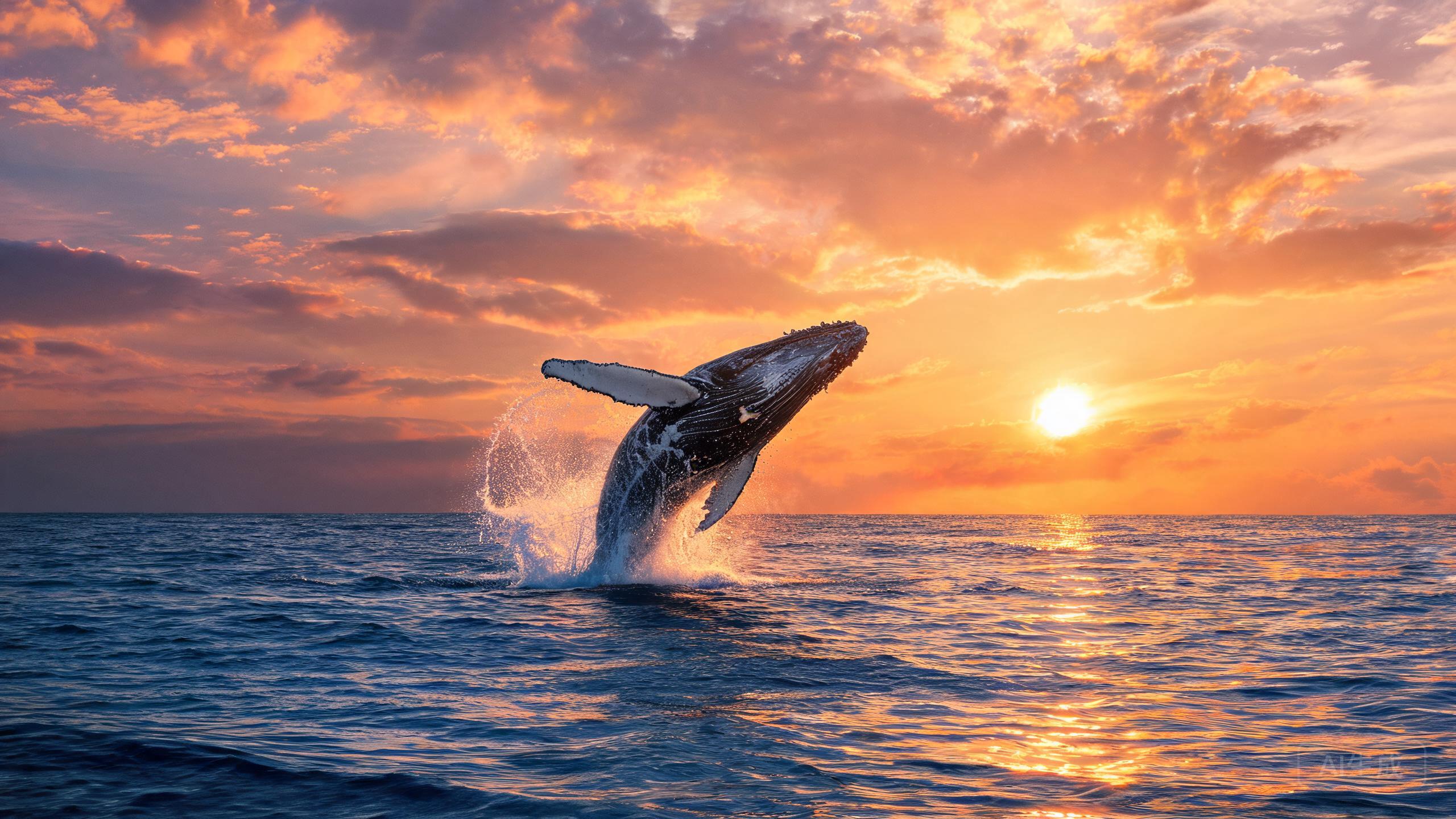
If you have ever stood on a boat and watched a humpback whale breach the surface, sending a plume of mist into the salty air, you probably felt a sense of awe at the sheer scale of the creature. What you almost certainly did not think about was carbon accounting. Yet a growing body of research from marine biologists and climate scientists suggests that these ocean giants are among the most powerful carbon sequestration tools on the planet, and protecting them might be just as important as planting forests. A single great whale, over the course of its roughly 60-year lifespan, can capture and store an amount of carbon equivalent to what thousands of trees absorb in the same timeframe. When the whale dies, its massive body sinks to the ocean floor and locks that carbon away for centuries, a process so efficient that researchers have given it a name: the whale pump.
The whale pump works through a surprisingly elegant biological mechanism. Whales feed in the deep ocean, where nutrients are abundant but sunlight is scarce, and then they return to the surface to breathe, rest, and, crucially, defecate. Whale feces are extraordinarily rich in iron and nitrogen, nutrients that are chronically limited in the sunlit upper layers of the ocean where phytoplankton live. When whales release these nutrients near the surface, they act as a potent fertilizer, triggering massive blooms of microscopic algae. These phytoplankton are the true workhorses of the operation, they photosynthesize just like land plants, drawing carbon dioxide out of the atmosphere and converting it into organic matter. Scientists estimate that phytoplankton are responsible for producing at least 50 percent of the oxygen we breathe, and when they die, a portion of them sink to the deep ocean, taking their stored carbon with them. The presence of whales can increase local phytoplankton productivity by an astonishing degree, one study in the Southern Ocean found that iron from whale feces could boost phytoplankton growth enough to sequester hundreds of thousands of tons of carbon dioxide annually.
To understand just how much carbon a whale can sequester, it helps to look at the numbers. A great whale like a blue whale or a humpback can weigh between 30 and 150 metric tons, and roughly 40 percent of that mass is carbon. That means a single large whale carries roughly 12 to 60 tons of carbon in its body alone. When the whale dies a natural death, its carcass sinks to the ocean floor in what marine biologists call a whale fall, creating a localized ecosystem that sustains deep-sea creatures for decades while keeping that carbon locked away from the atmosphere for centuries. By comparison, a mature tree absorbs about 22 kilograms of carbon dioxide per year, which translates to roughly 6 kilograms of actual carbon. Even over a 100-year lifespan, a tree would sequester only about 0.6 tons of carbon. Doing the simple division, one dead whale sinking to the bottom of the ocean is equivalent to the carbon storage of roughly 20 to 100 mature trees, depending on the whale species. But that calculation only accounts for the whale body itself and ignores the vastly larger impact of the phytoplankton blooms fertilized by whale activity during its lifetime.
When researchers factor in the phytoplankton effect, the comparison becomes almost comical. A 2019 study published by economists at the International Monetary Fund attempted to quantify the total carbon value of a single great whale, and their estimate was staggering. They concluded that the average great whale, over its lifetime, helps sequester roughly 1,700 tons of carbon dioxide through the combined mechanisms of body storage and phytoplankton fertilization. At conservative carbon market prices, that makes each whale worth roughly $2 million in climate benefits alone. Extrapolating across current great whale populations, the researchers calculated that if whale numbers were restored to their pre-commercial whaling levels, the increased carbon sequestration would be equivalent to adding roughly 2 billion trees to the planet every year. That is not a typo. Two billion trees worth of carbon capture, achieved not by clearing land and planting saplings, but simply by letting whale populations recover in the ocean that already covers 70 percent of our planet.
The flip side of this discovery is the uncomfortable reality of how much damage whaling has already done to the planet carbon budget. Before industrial whaling began in earnest in the 19th century, there were an estimated 4 to 5 million great whales swimming in the world oceans. By the time commercial whaling was broadly banned in 1986, that number had plummeted to around 1.3 million. The loss was not just a biodiversity tragedy, it was a climate catastrophe hiding in plain sight. Those missing whales represented millions of tons of carbon that would have been sequestered, not to mention the phytoplankton productivity that never happened because the nutrient pump had been broken. Some researchers have even suggested that the disruption of the whale pump contributed to the decline of fish stocks in certain regions, because less phytoplankton meant less food at the base of the marine food web. The recovery has been slow, great whales reproduce slowly, with females giving birth to a single calf every two to four years, and many populations remain at a fraction of their historic abundance.
The good news is that whale populations are recovering in many parts of the world, and the climate math is creating powerful new incentives for their protection. Countries like Chile, Ecuador, and the Seychelles have expanded marine protected areas specifically with carbon storage in mind, recognizing that a living whale is worth far more than the one-time economic value of its meat or oil. New financial instruments are being developed, including blue carbon credits that account for the carbon sequestration value of marine ecosystems, with whales positioned as a flagship species. Shipping lanes are being rerouted in places like the Mediterranean and off the coast of California to reduce whale strikes, not just to save the animals themselves, but to preserve their climate benefits. Even the rewilding movement, traditionally focused on land-based ecosystems like wolves in Yellowstone, is beginning to embrace whale recovery as a keystone strategy for planetary health.
All of this forces us to ask a deeper question about how we value the natural world. For decades, environmental debates have pitted economic growth against conservation, framing whales as charismatic animals that we should save for ethical or aesthetic reasons. The carbon accounting changes the equation entirely. Whales are not merely beautiful creatures that happen to live in the ocean, they are active, irreplaceable participants in the global carbon cycle, and their recovery is a genuinely viable climate solution. Unlike experimental carbon capture technologies that require billions in infrastructure and energy input, whale conservation is essentially free, it simply requires us to stop killing them and to give them space to live, breed, and poop in peace. The next time you see a photograph of a whale tail disappearing beneath the waves, remember that what you are looking at is not just a symbol of the wild. You are looking at a living carbon capture device that has been perfected over 50 million years of evolution, and it might just be the most cost-effective climate technology we have ever had.